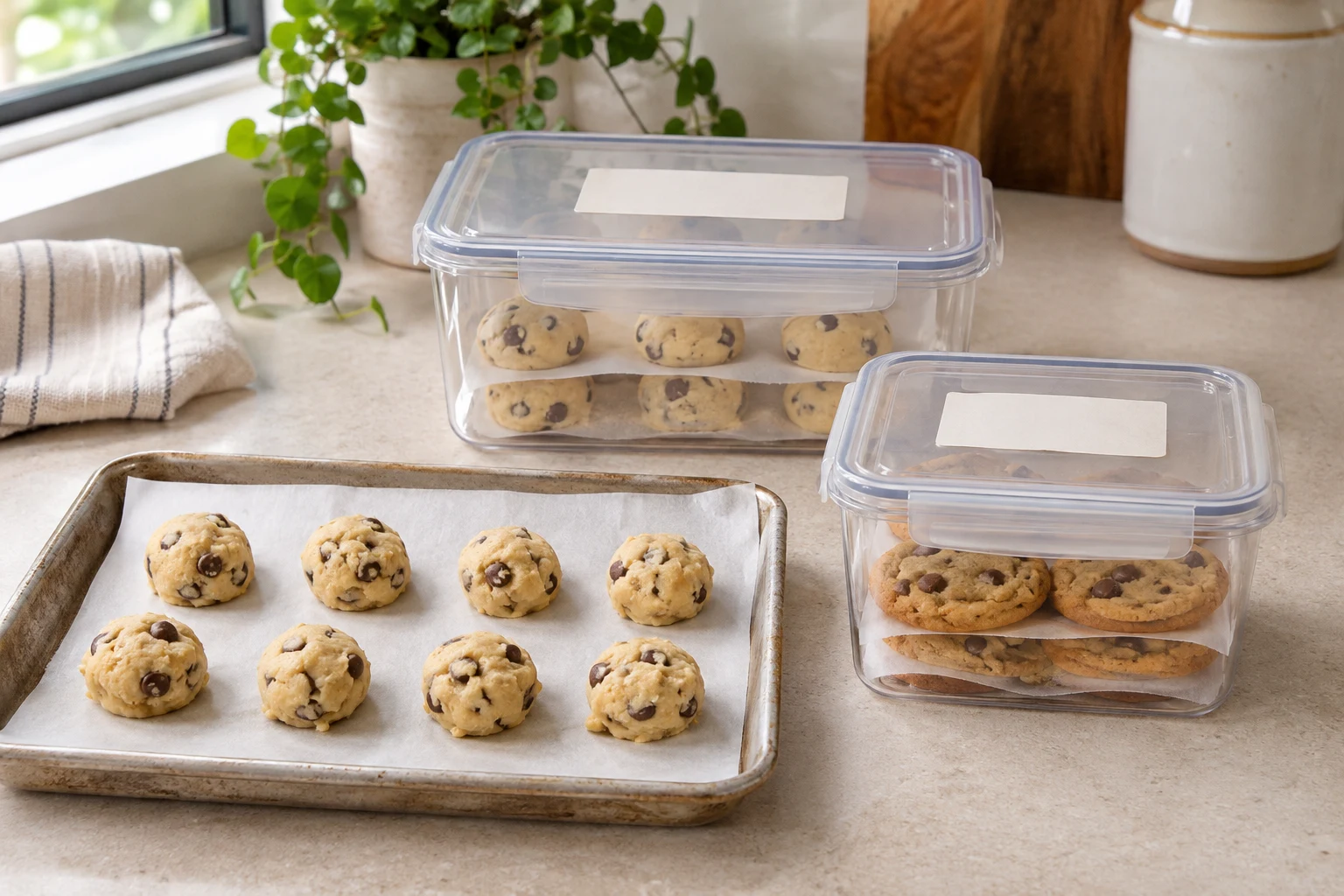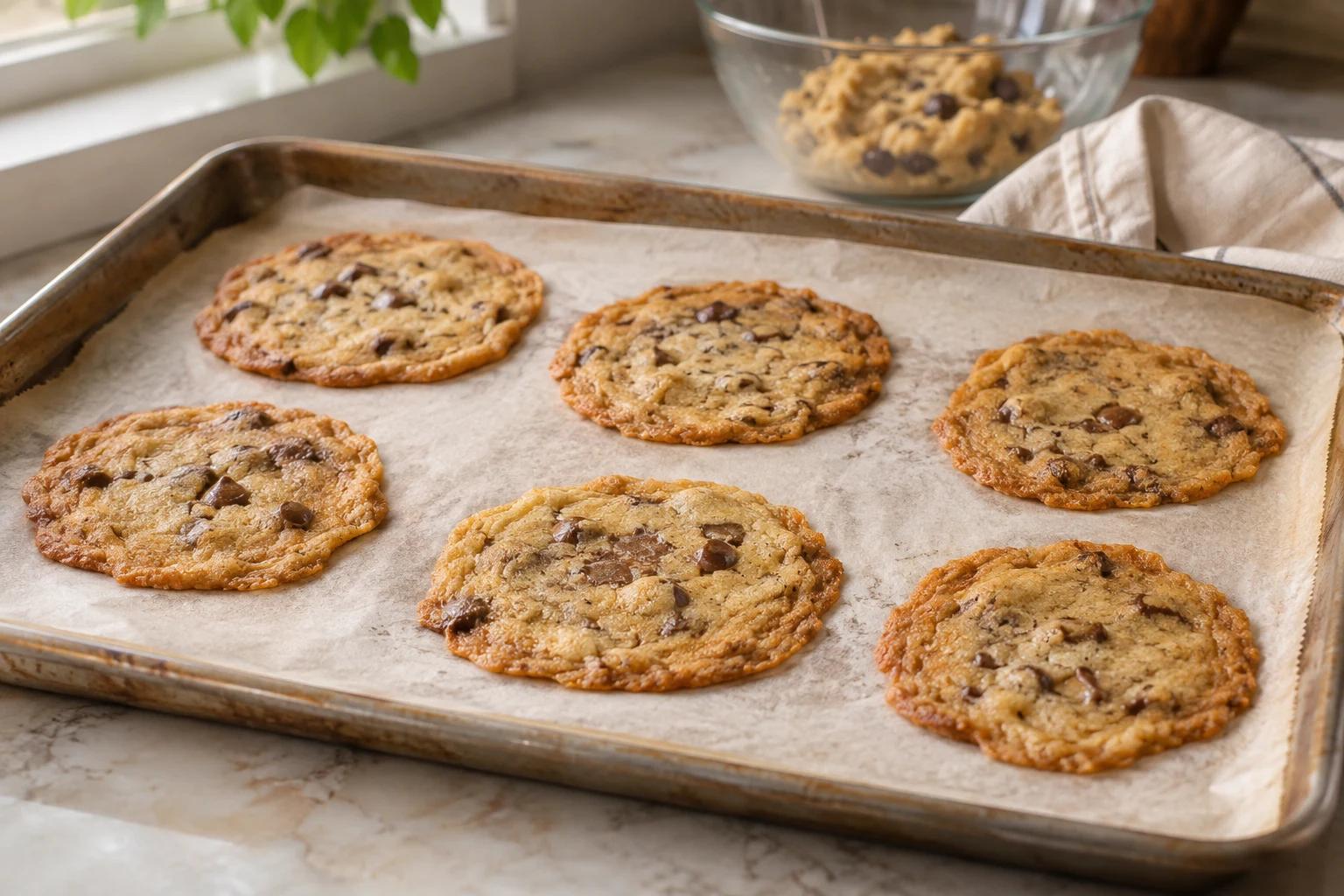
Cookies can spread too much when the ingredient balance, mixing method, dough condition or baking setup differs from what the recipe expects. Start by checking what changed. A flat cookie alone cannot tell you which step caused the problem.
First, compare your cookies with the intended result. A thin, crisp cookie and a thick, chewy cookie are different goals. Our cookie varieties guide can help you identify the style you are trying to bake.
Start with the recipe and your notes
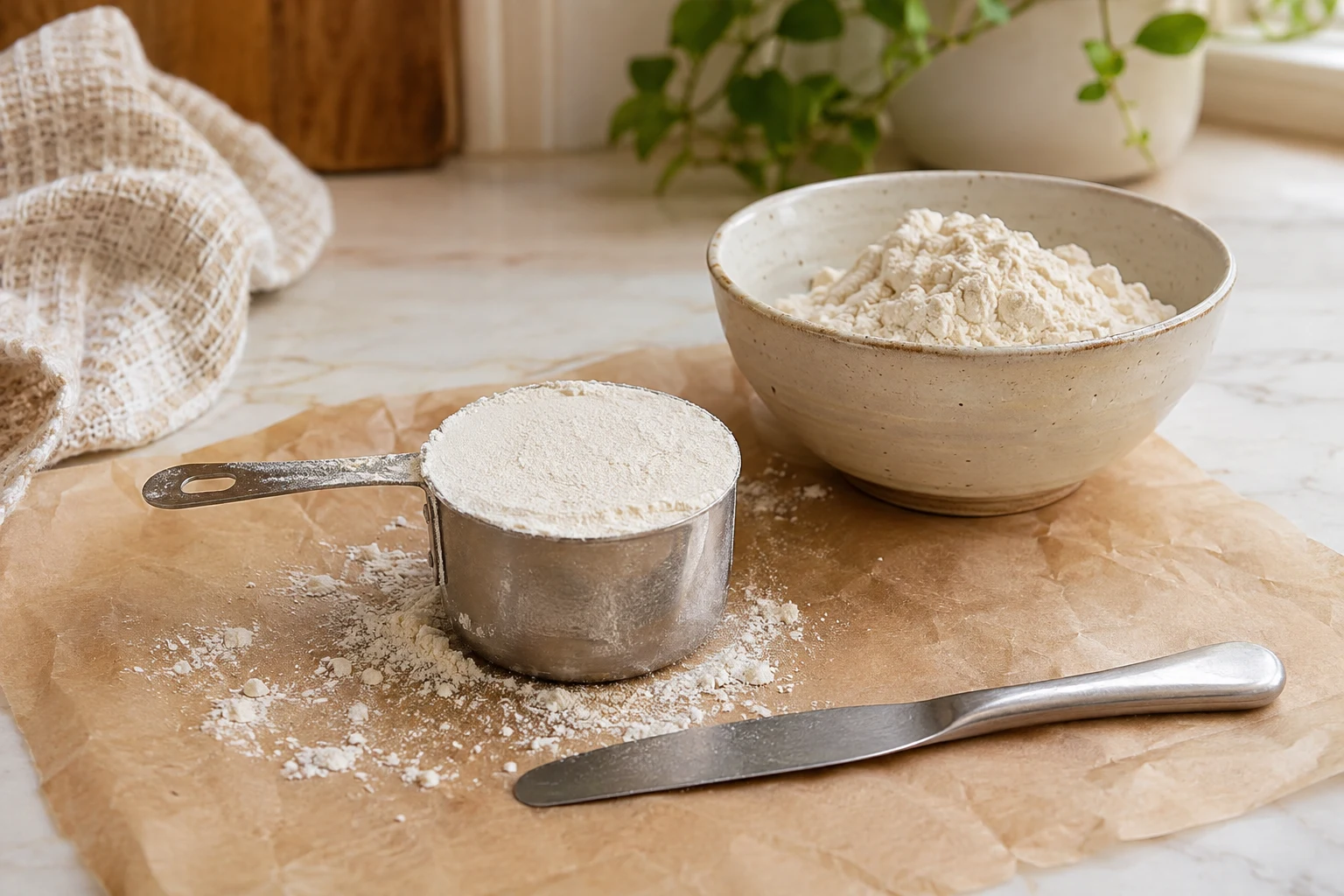
Before changing the remaining dough, answer these questions:
- Did you use the stated ingredients and quantities, including the type of flour and fat?
- Did the recipe ask for melted butter or softened butter?
- Did you follow any chilling step?
- Did the first tray spread, or only the later ones?
- Did you use the specified oven setting, pan preparation and portion size?
These questions help you choose one thing to investigate. They are not a way to identify the cause from appearance alone.
Check the likely causes in order
| Check | What to look for | Next useful action |
|---|---|---|
| Ingredients | A missed measurement or substitution | Compare your ingredients with the original recipe before adding anything |
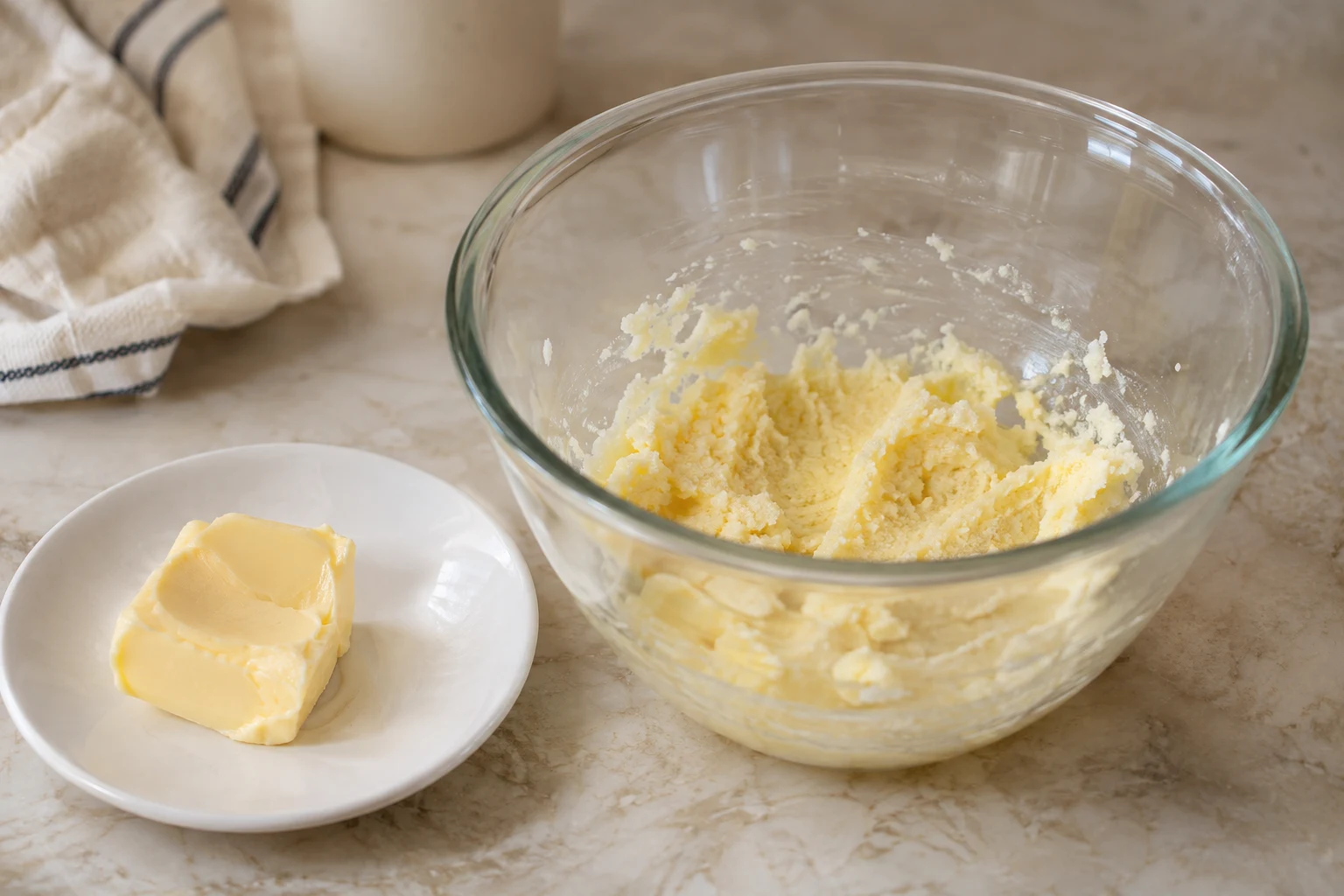
| Butter and mixing | Melted butter in a recipe that calls for creaming | Review the method; chilling cannot repeat the original mixing step |
| Dough handling | A skipped recipe chilling step | Follow the stated rest before baking another small sample |
| Baking sheet | Later portions placed on a still-warm sheet | Let the sheet cool before loading it again |
| Oven and liner | A different setting, temperature or baking surface | Return to the recipe's setup and check the actual oven temperature |
King Arthur identifies ingredient imbalance, creaming, omitted chilling, baking surface and a cool oven among possible causes of excessive spread. If the recipe gives ingredient weights, use those rather than estimating how much flour to add after mixing. Treat these as checks, not proof that every flat batch has the same cause.
Melted butter is right for some cookies
Read the method before blaming the butter. Our honey oatmeal raisin cookies use melted-and-cooled butter. Our sugar cookie cutouts begin by creaming softened butter with sugar. Switching the butter state changes the instructions you are following.
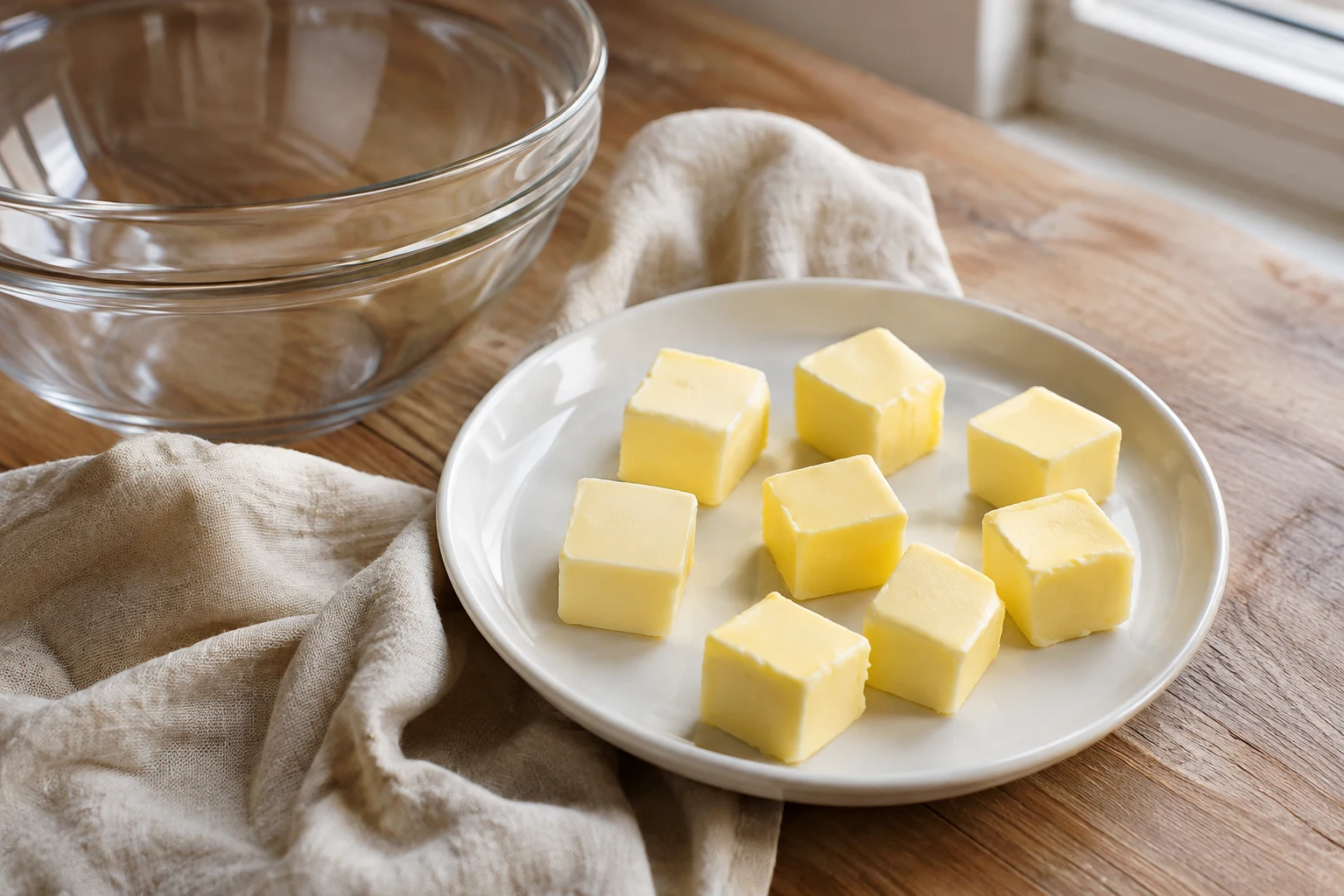
For creaming, butter should accept a finger indentation while retaining some resistance; it should not be a greasy puddle. The purpose of creaming is to incorporate air. King Arthur's demonstration shows how butter that is too cold or too warm behaves differently during that process.
If you accidentally melted butter intended for creaming, record the mistake. Refrigerating the finished dough does not undo and repeat the earlier mixing step. Do not assume that a longer chill guarantees the recipe's intended result.
Why do cookies still spread after chilling?
Chilling can affect spread, but it is only one part of the recipe. In King Arthur's drop-cookie comparison, refrigerated dough spread less than dough baked immediately. That is evidence for the tested dough, not a guarantee that every cookie needs the same chilling period.
If you followed the chilling instructions and still have excessive spreading, check the ingredient quantities, mixing and baking setup next. Repeating the chill without reviewing those details gives you little new information.
When the first tray works and the next one does not
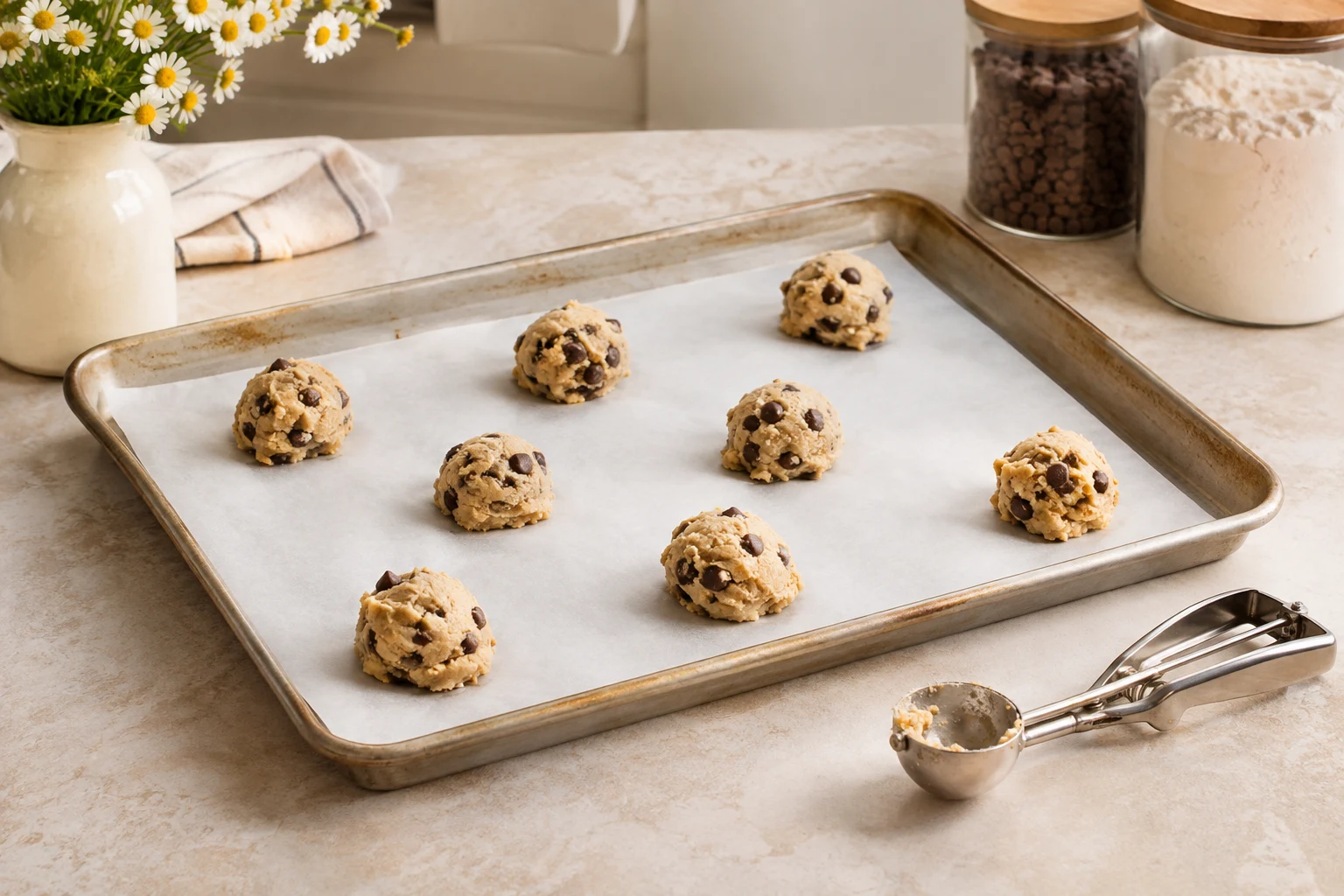
Check the baking sheet before changing the recipe. Betty Crocker advises cooling sheets between batches because dough can spread on a warm sheet. Prepare the surface as your recipe directs, too.
Keep the next comparison simple: same dough portion, same liner and oven setting, with a cooled sheet. Write down the result before trying another change.
Can I rescue the remaining dough?
A small test bake is more useful than changing the whole bowl at once. Correct a known setup mistake first, then bake a sample. Betty Crocker also recommends a test cookie before committing the full tray.
Do not add flour simply because the dough looks soft. If you know an ingredient was omitted, use the recipe to work out what is missing. If the cause is uncertain, a random adjustment may leave you with a different problem and no clearer explanation.
For the next batch, keep a short record of ingredient amounts, butter state, rest, sheet, oven setting and portion size. Our basic techniques guide covers measuring and mixing preparation. Change one detail at a time so each bake teaches you something useful.