Softened butter should be workable while still holding its shape. For a recipe that starts by creaming butter and sugar, cut refrigerated butter into small, even pieces and let it soften away from direct heat. Check the texture before mixing; a timer alone cannot tell you whether the center is ready.
First read the recipe. Cold butter for pastry, softened butter for creaming, and melted butter are different starting points. This guide is for recipes that specifically ask for softened butter.
Start with smaller pieces
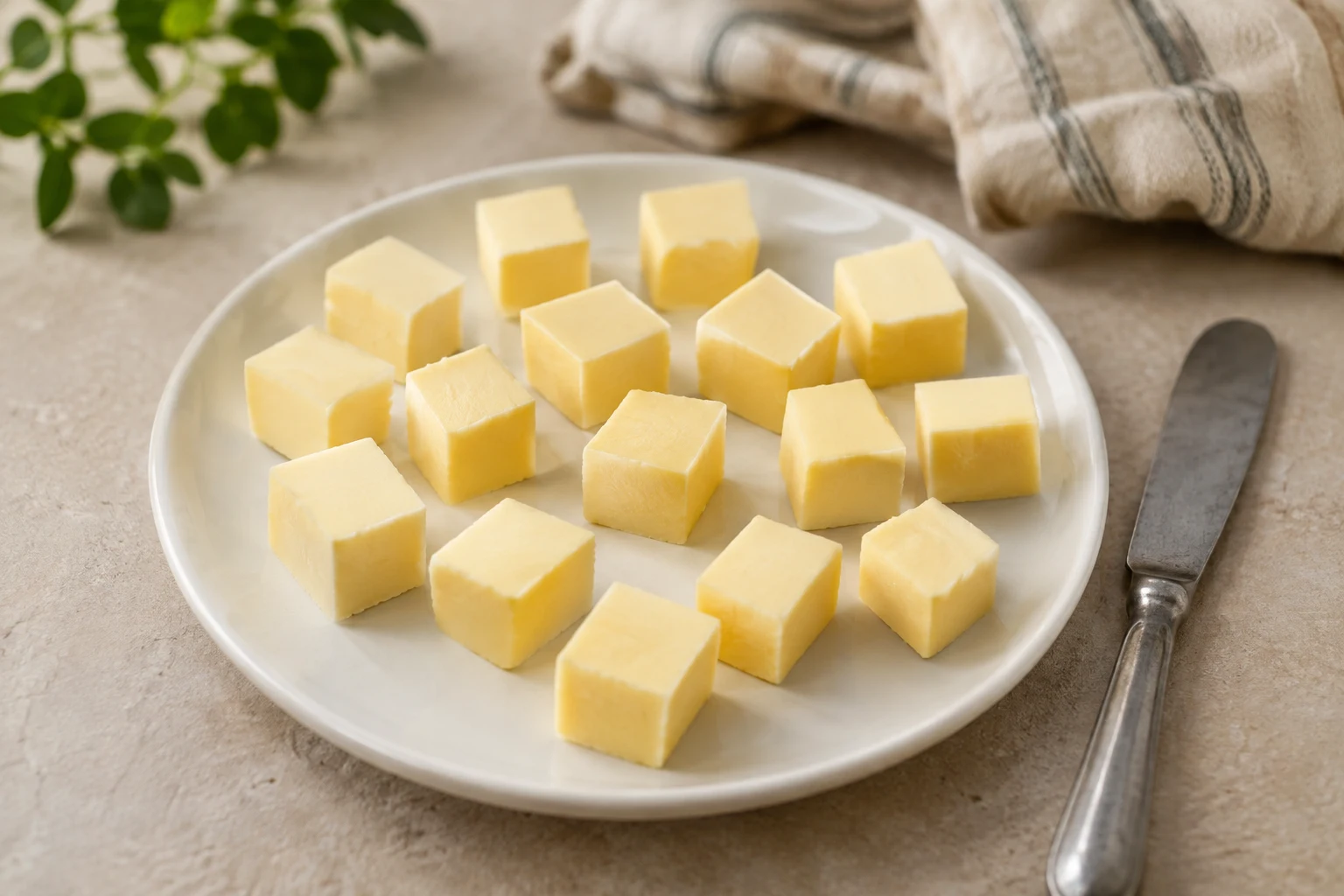
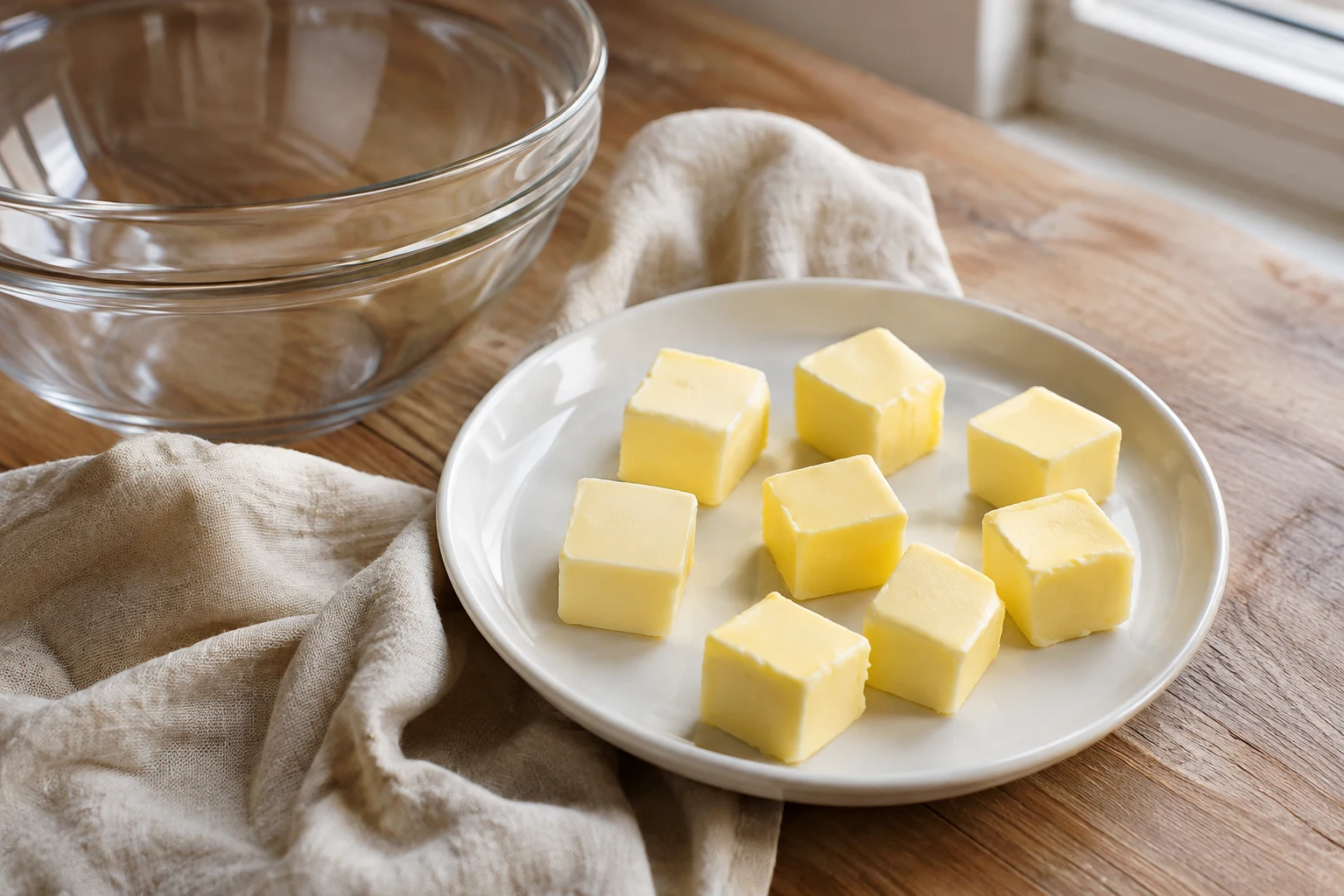
Measure the butter while it is still easy to handle. Cut it into similarly sized cubes and spread them in one layer on a plate. Set the plate on the counter while you measure the remaining ingredients. King Arthur Baking includes cutting butter into small pieces among its softening methods; its published comparison also shows why the conditions matter.
Check the pieces periodically instead of relying on a fixed softening time. Butter straight from a very cold refrigerator or sitting in a cool kitchen will take longer. Turn a larger piece over and check its center before you start mixing.
Avoid parking the plate on a hot appliance. The aim is an even, workable texture, so stop and check rather than adding more heat whenever the outside feels soft.
Check the center, not just the surface
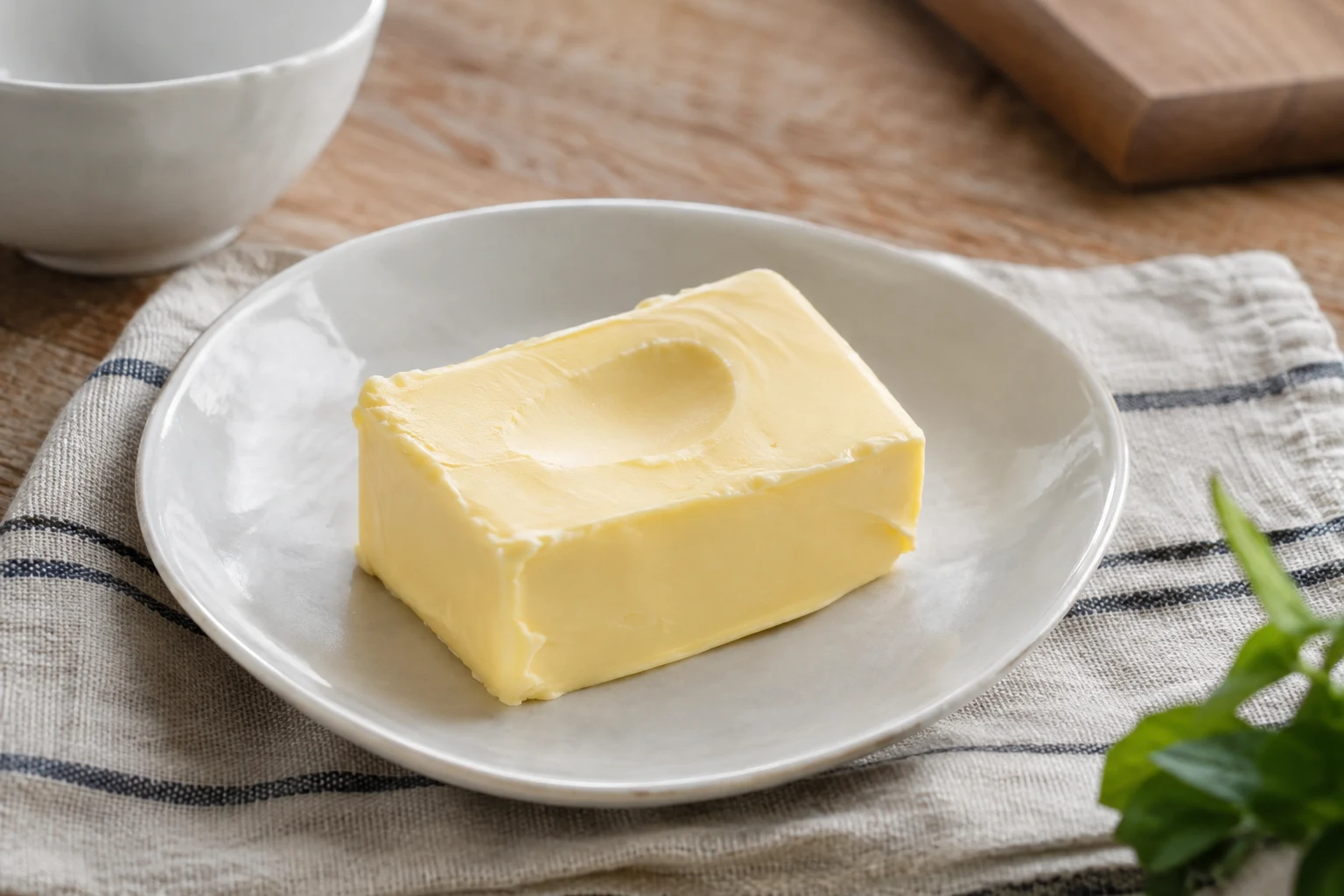
Press a larger piece gently with a clean finger or the back of a spoon. Look for an indentation with a little resistance: the butter should hold its shape, without looking greasy or letting your finger slide straight through it. Cut through a piece if the outside feels ready but you suspect a firm middle. If it still resists, leave it a little longer and check again.
Use the recipe's own temperature or texture instructions when provided. “Room temperature” is a recipe cue, not a requirement to match whatever your kitchen thermometer says that day. King Arthur Baking's creaming guidance emphasizes that butter condition affects the process.
For a practical next step, read the mixing sequence in our soft sugar cookie cutouts before turning on the mixer. Have the sugar measured and the bowl ready so prepared butter does not sit forgotten while you organize everything else.
What if the butter melts?
Do not count melted-and-rechilled butter as an exact replacement for softened butter in a creamed recipe. King Arthur Baking explains that cooling melted butter does not reliably restore its original baking behavior. Reserve it for a recipe that calls for melted butter, handling and storing it appropriately, and start with another portion for creaming.
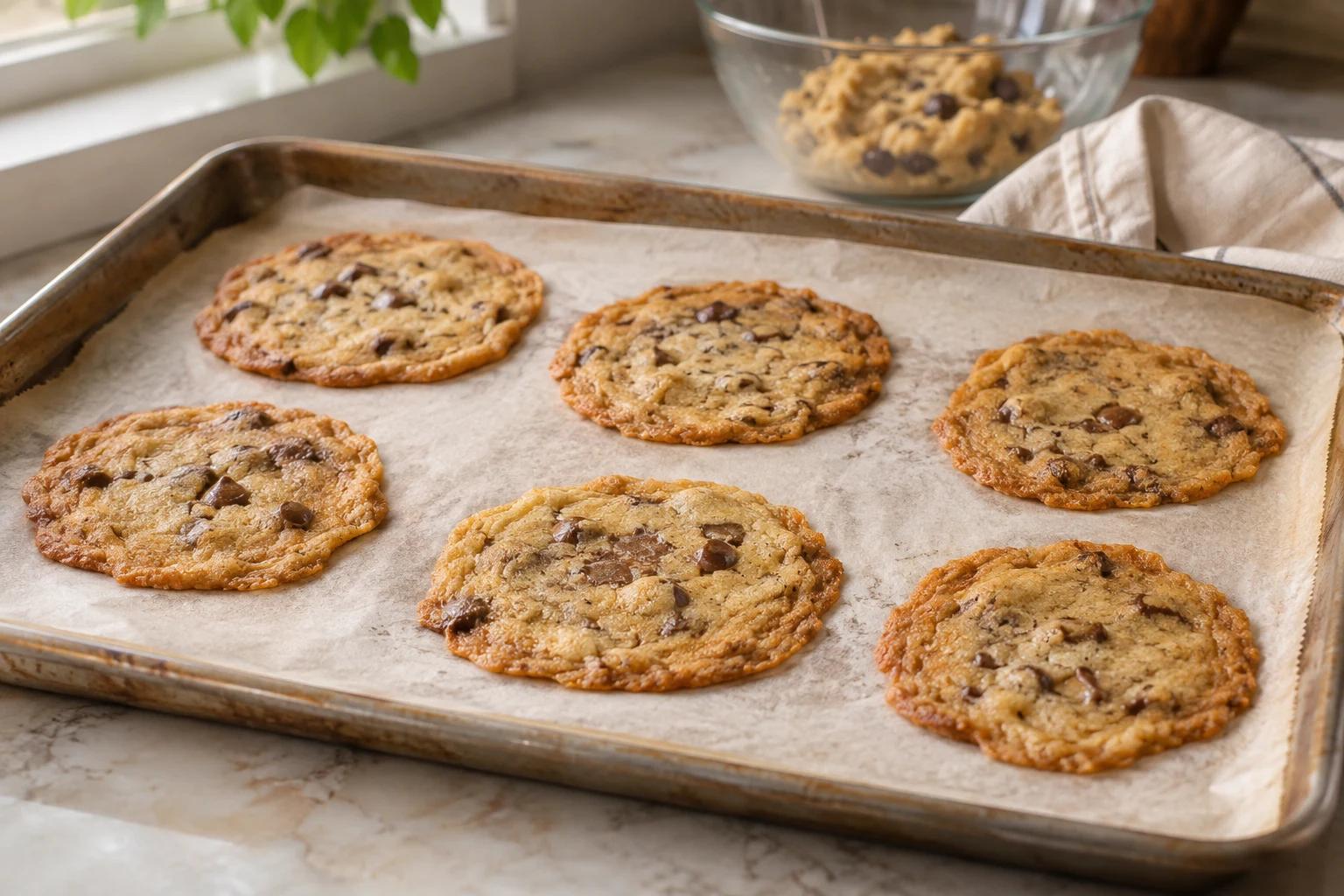
This matters when diagnosing a batch: write down whether the butter stayed solid or became liquid. That is a more useful note than “left it out for a while.” If cookies subsequently spread, use our flat-cookie troubleshooting guide to work through the other variables too.
Can I use the microwave?
A microwave can soften butter unevenly and leave a melted patch before the rest feels workable. For a beginner who wants to preserve a solid texture, the small-piece counter method is easier to inspect. If you follow a recipe's microwave method, check between short applications and stop before melting; appliance power varies.
Before you cream butter and sugar
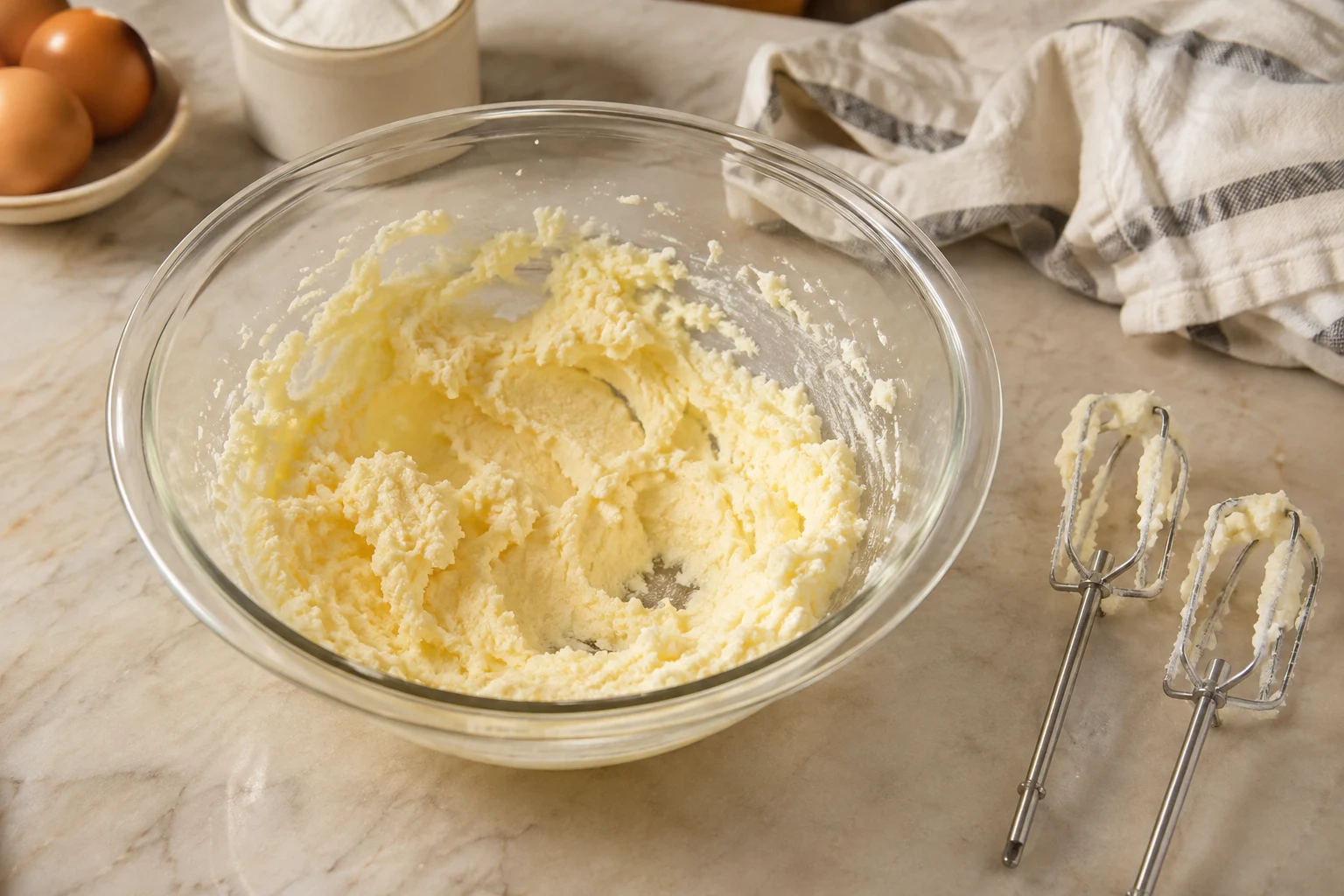
Confirm that the butter is softened as the recipe requests, the measured quantity is correct, and there is no liquid pool. Follow the stated mixing sequence and scrape the bowl as directed. Softening is the preparation step; creaming happens afterward, when you beat the butter with the sugar as your recipe directs. Do not try to make plain butter look like the fluffy butter-and-sugar mixture pictured in this section.
This guide draws on King Arthur Baking's published softening and creaming guidance. Images are AI-generated editorial illustrations in a photographic style; they are not records of kitchen tests.