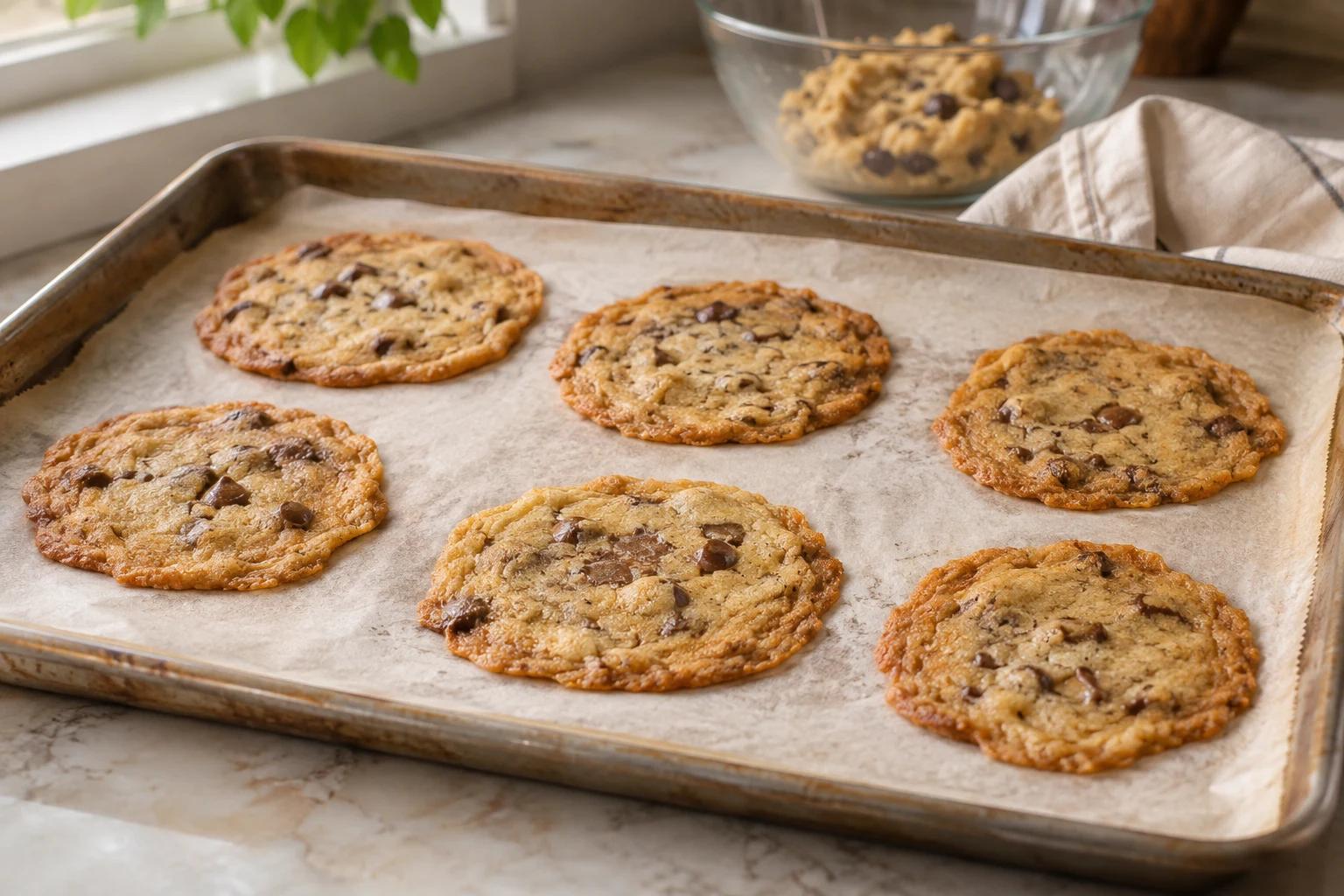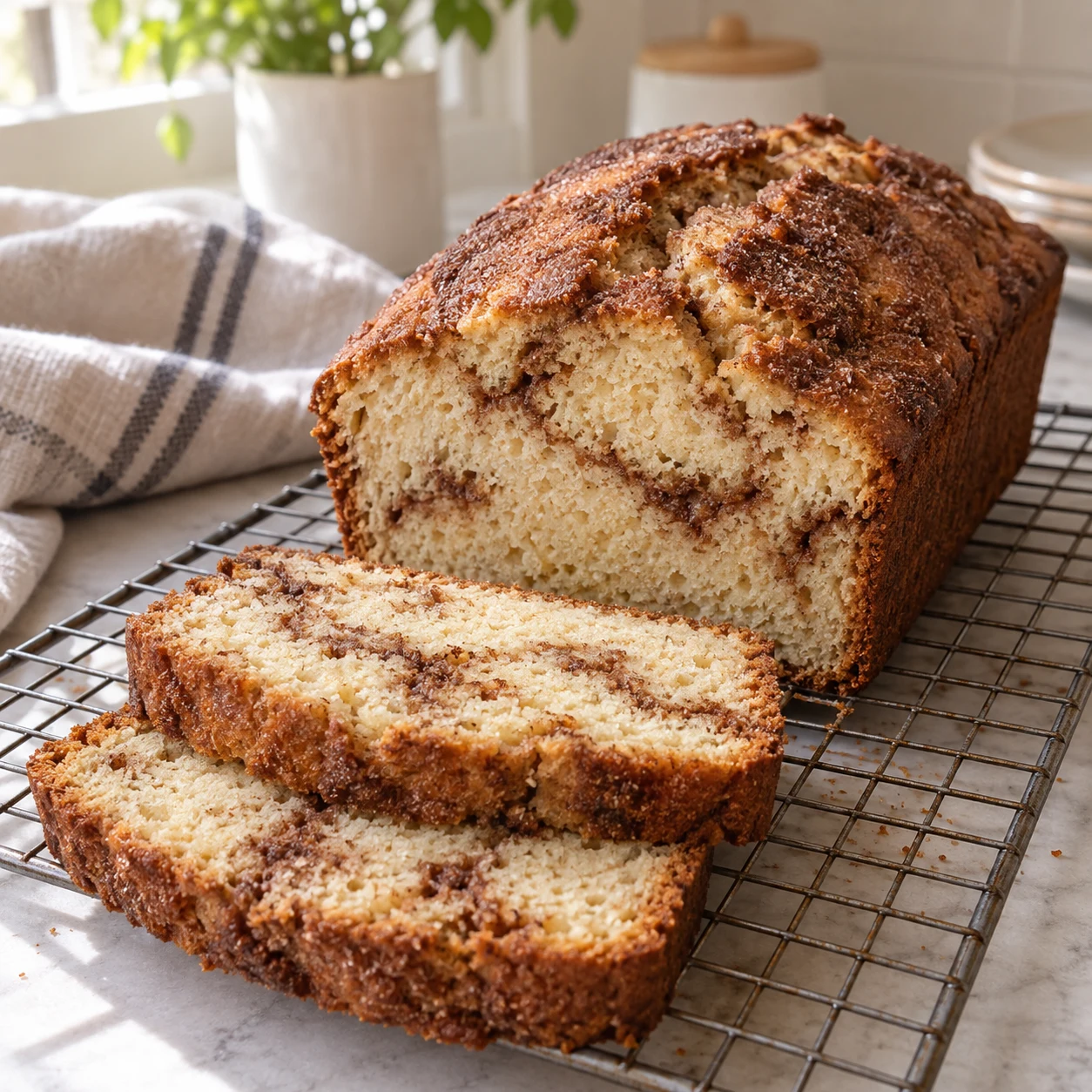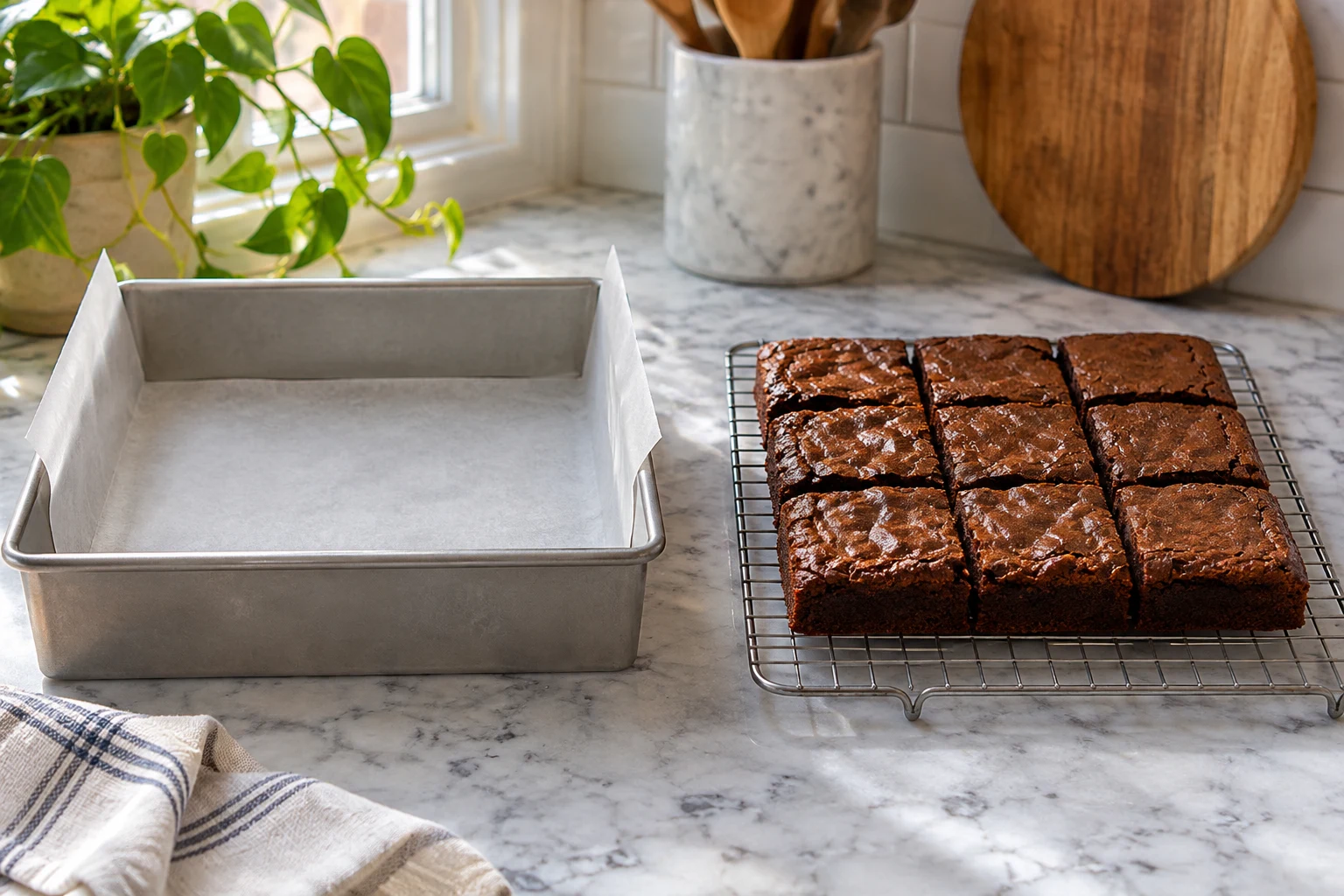
A parchment sling gives you something to hold when removing brownies, bars or a quick loaf from its pan. The useful part is a flat liner with manageable tabs, rather than a large sheet crumpled into the batter. Start with the pan size and preparation specified by your recipe.
This guide is for conventional-oven bakes whose recipes allow parchment. It is not a rule to line every pan: some cakes depend on ungreased surfaces, and a sling does not replace a removable base when a recipe specifically requires one.
Cut the sling to fit the pan
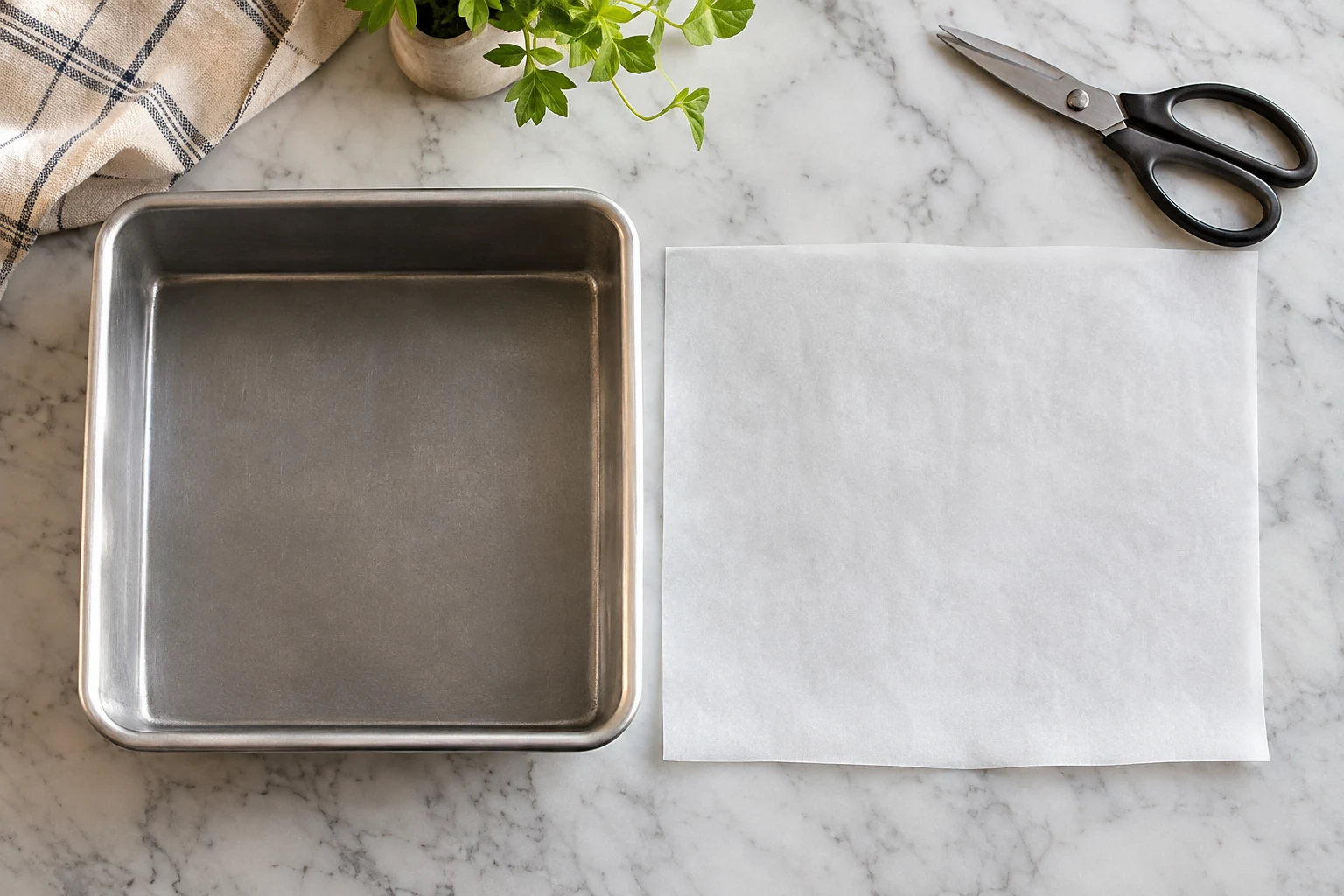
For a square pan, cut a strip about the width of its base and long enough to go down one wall, across the bottom and up the opposite wall, with a modest tab on each side. Press the strip into the empty pan to check its fit before adding batter. Trim excessive paper rather than letting it project far beyond the rim.
If you want the other two walls lined as well, use a second strip crossing the first. Keep the bottom layers flat and the corners tidy; folds pushed into the batter can leave awkward edges. A loaf pan can use a strip across its width, with tabs at its long sides. Keep the recipe's separate instructions for the exposed ends.
King Arthur Baking's parchment-sling guide describes this approach for bars and quick breads. It provides a release aid, not a change to pan dimensions or baking time.
Press the paper flat and follow greasing instructions
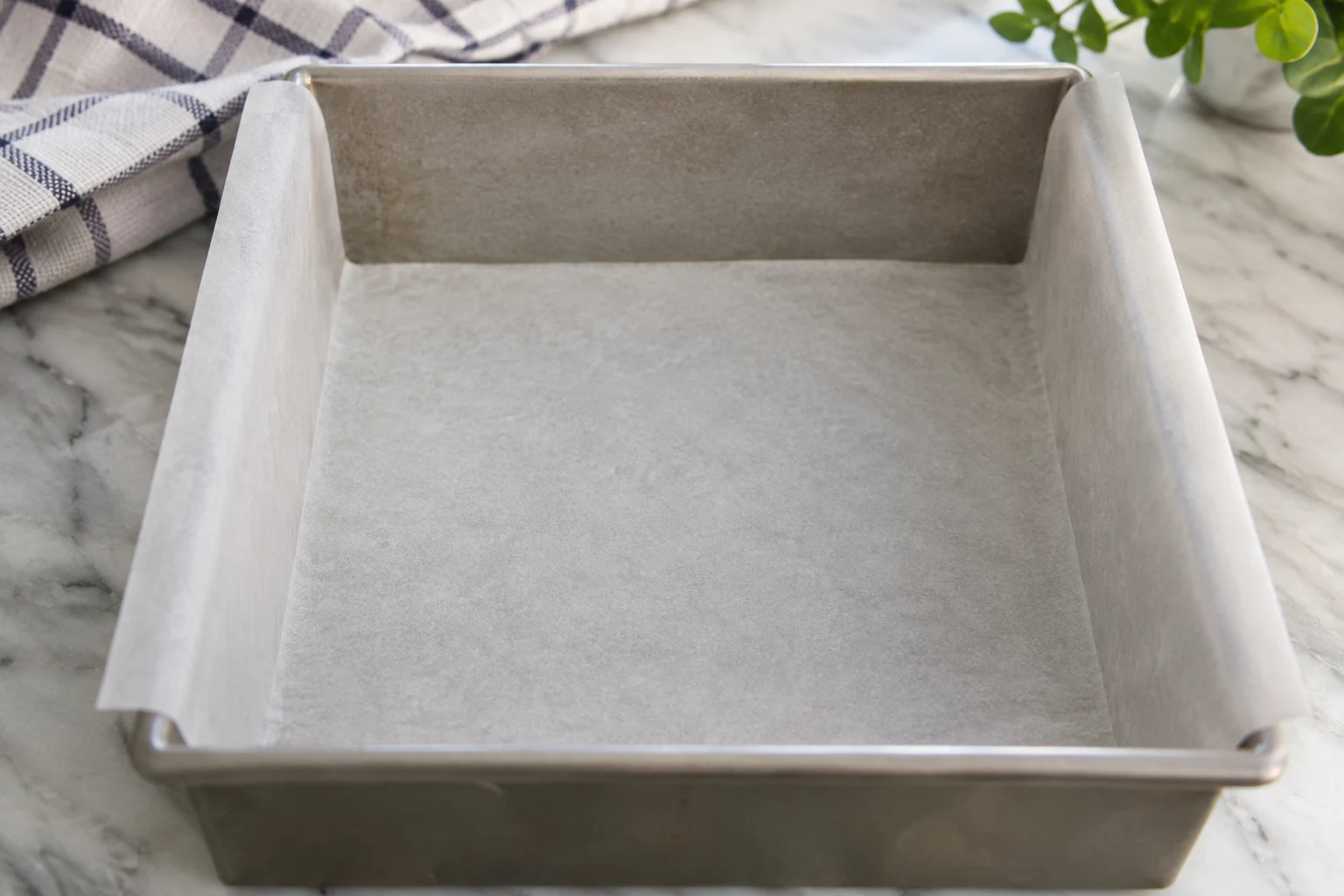
Read the recipe's full sequence: grease the pan, add parchment, and grease the paper only when directed. A little of the specified grease under the liner can help hold it in place. Do not assume that nonstick paper makes all greasing unnecessary; King Arthur Baking notes that recipe requirements differ.
Use baking parchment with a heat rating suitable for the recipe and appliance. Check your own package: Reynolds lists 425°F for its parchment rolls, which is a product limit rather than a universal rating. Keep paper away from heating elements, oven walls and flames, and do not use it under a broiler. Wax paper is not an interchangeable exposed oven liner.
Add the batter gently and spread it into the corners without dragging the paper out of place. Recheck the tabs before the pan goes into the preheated oven.
Cool before lifting
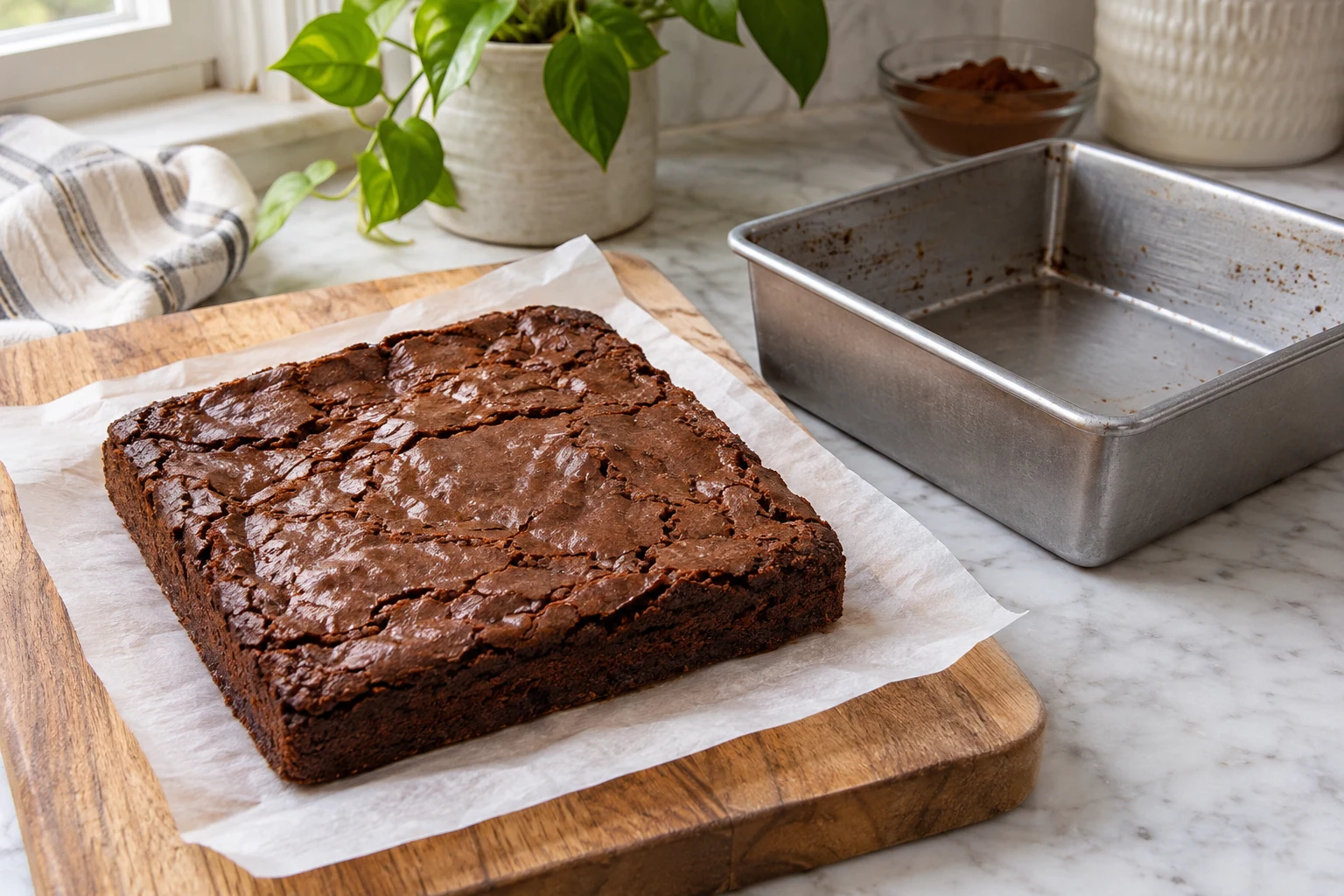
Follow the bake's cooling directions. A hot, fragile slab can tear even when the liner releases cleanly. Support the bake as you lift it onto a board; do not pull suddenly on one tab. If it resists, check the exposed sides rather than forcing it.
A sling helps with removal; it does not tell you whether the center has baked through. Use the recipe's doneness checks and our cake-doneness guide when making a cake.
Recipes with pan-preparation steps to read first
These recipes provide specific pan sizes and lining or greasing directions. Keep those instructions when applying the fitting checklist.
- Chocolate Brownies with Avocado Oil
- One-Bowl Spiced Pumpkin Breakfast Bars with Walnuts | Easy Fall Breakfast Recipe
- Whole-Grain Blueberry Breakfast Bars with Chia & Flax Seeds – Easy Morning Bake
- Lemon Poppy Seed Breakfast Loaf with Greek Yogurt - Easy Morning Bake
This source-based guide draws on King Arthur Baking and Reynolds product guidance. Images are AI-generated editorial illustrations, not photographs of our kitchen tests.