Start with the recipe's baking window, then check several signs together: the appearance of the top and edges, the center's response to a light touch, and the result of a tester inserted into the cake. A clean toothpick is useful information, but it is not a guarantee on its own.
This guide is for cakes intended to bake through to a set crumb. Cheesecake, molten-center desserts, brownies and bread need their own instructions.
Look before you open the oven
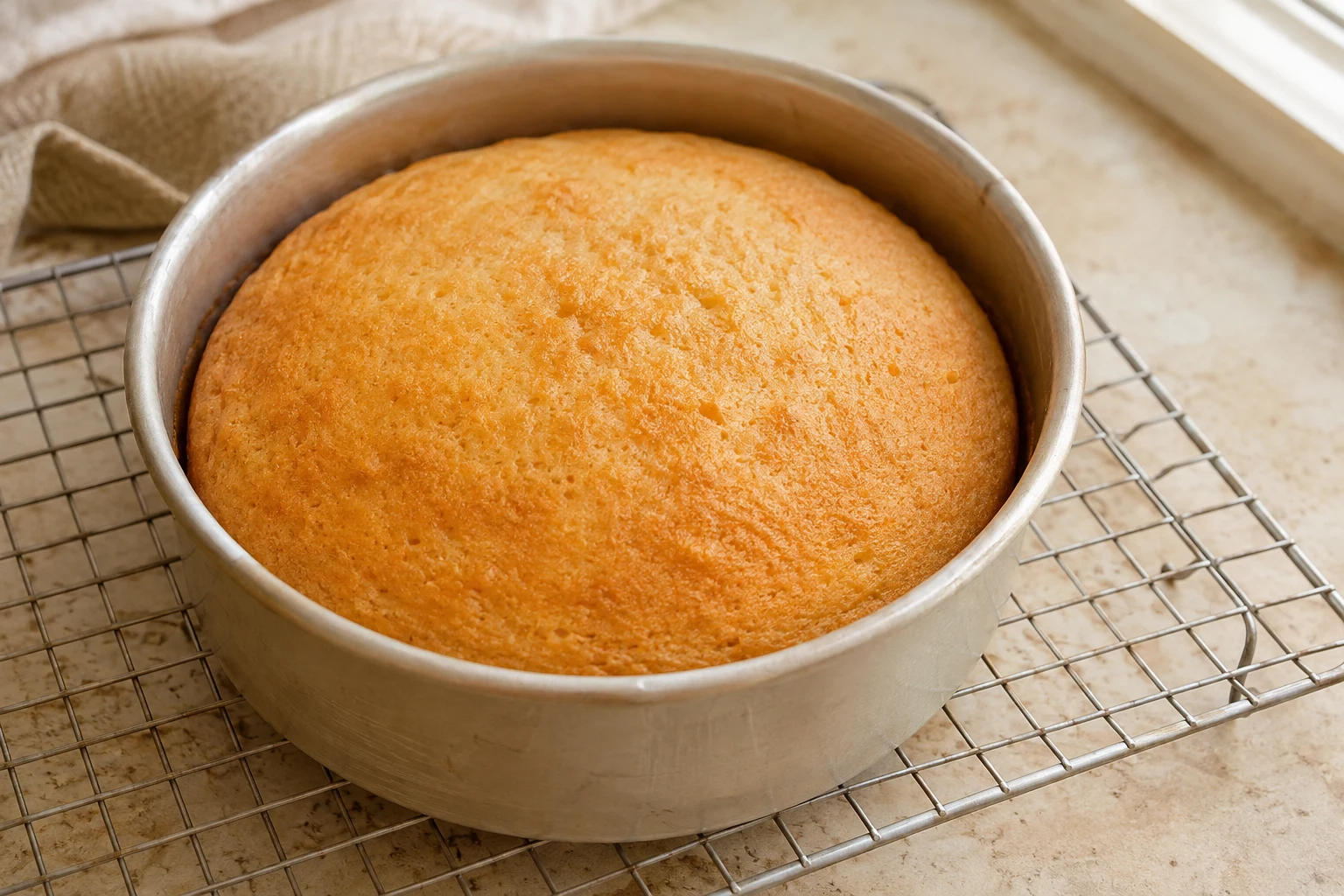
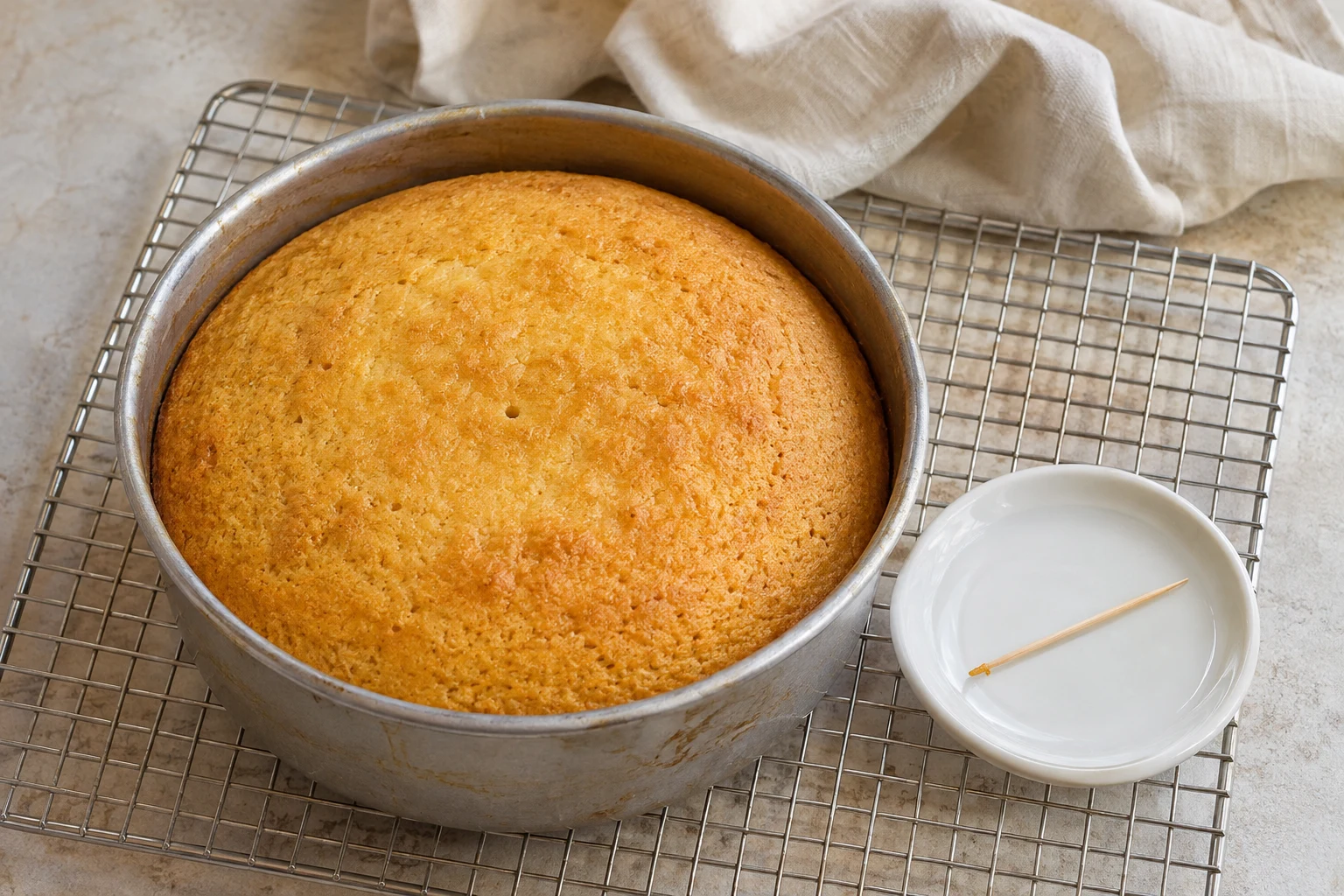
Near the recipe's first checking time, use the oven window to inspect the cake. Look for the changes that recipe describes, rather than waiting for every cake to become the same shade of brown.
In a lighter cake, color can be helpful. It is less informative in a dark chocolate cake. Betty Crocker's guide also describes a gentle spring-back check: a center that remains indented needs more baking. Recheck after a short interval suited to the recipe, rather than repeatedly opening the oven. Take care around the hot pan and oven.
Edges can provide another clue, but know the pan preparation. A slight gap may develop around a cake baked in a greased pan. It is not a useful universal requirement: cakes intended to cling to ungreased sides are an exception.
What should the toothpick look like?
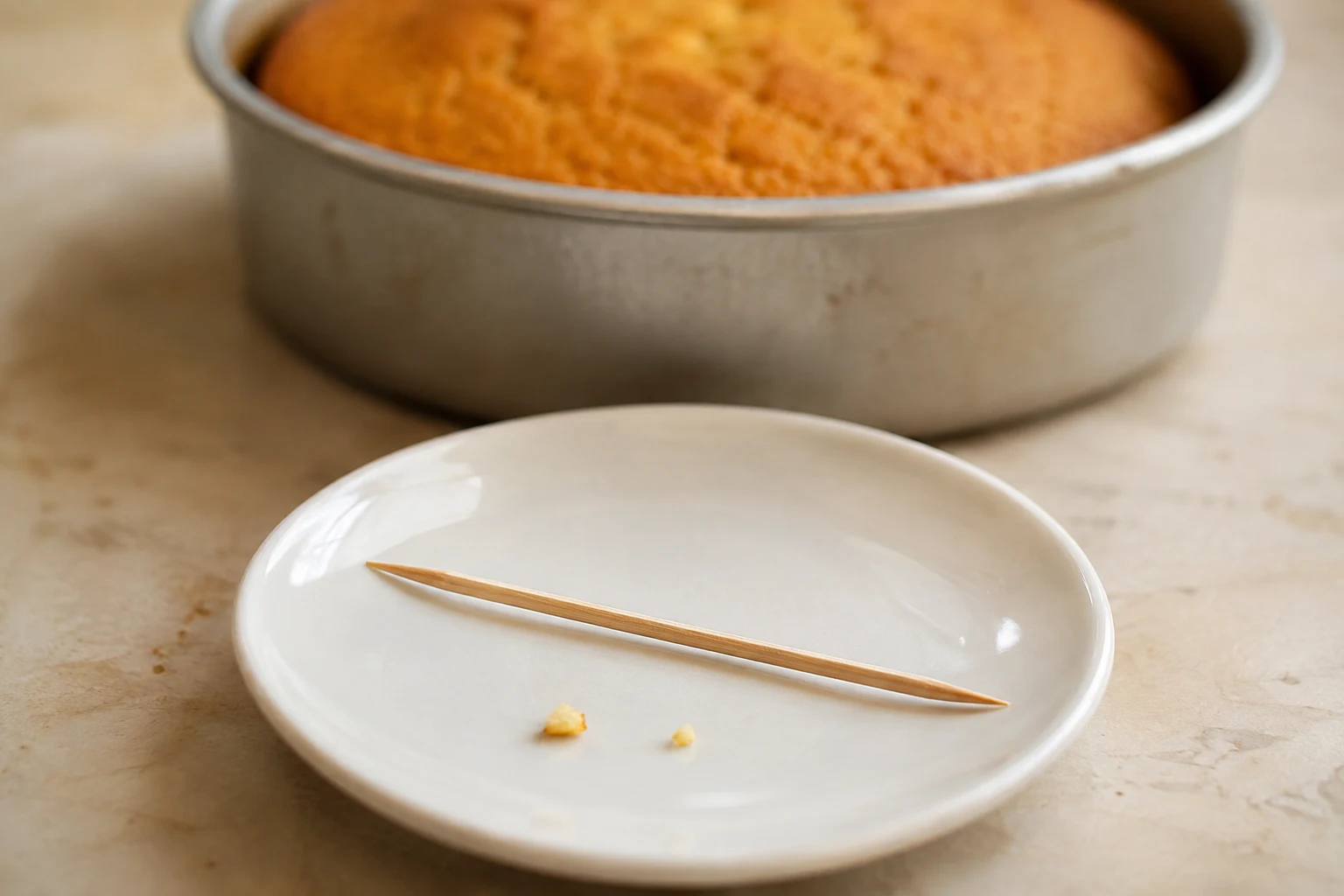
Insert a clean tester into the cake's center, following the recipe's directions. Inspect what comes back rather than describing everything on it as “crumbs.”
| Tester result | How to interpret it | Next check |
|---|---|---|
| Wet, sticky batter | The crumb at that point has not set | Continue baking and recheck using the recipe's cues |
| A clean tester | That sample did not bring out wet batter | Check the center's texture and other signs before deciding |
| Small crumbs | The recipe's specified endpoint matters | If it calls for a clean tester, do not automatically accept moist crumbs |
| A chocolate or fruit smear | You may have sampled an inclusion | Check a nearby area of cake crumb as well |
Wet batter means the cake needs more baking. Use the recipe's checking intervals and inspect the center again before removing it.
King Arthur notes that a mostly clean tester can still miss an underdone cake; it recommends using other signs alongside the test. The point is to assess the crumb, not merely to obtain an empty toothpick.
For an example of why the sampling location matters, King Arthur's cake guide tells readers to test the cake layer of a pudding cake rather than its sauce. With an ordinary cake containing chips or fruit, the practical question is similarly whether you sampled the cake or an inclusion.
Are moist crumbs always a good sign?
No single crumb description works for every formula. Follow the endpoint in the actual recipe. Our Victoria sponge calls for a golden cake and a clean toothpick. Our chocolate raspberry layer cake also specifies a clean toothpick; its cake layers use a gluten-free flour blend.
Neither recipe asks you to stop at wet batter. Do not substitute a general social-media rule about “a few moist crumbs” for the directions of the cake you are baking. The texture of one formula does not establish the endpoint of another.
Should you use a thermometer?
A thermometer can add information, especially when a recipe gives a target and explains where to measure. Use the probe according to its instructions, sample the center of the cake crumb and avoid touching the pan. Confirm an unexpected result with another careful reading before changing your plan.
Published recommendations differ. ThermoWorks gives a range of 200–209°F (93–98°C) for regular cakes and identifies exceptions. King Arthur cautions that cake temperature varies with the formula and should not be treated as a universal deciding threshold.
Use those numbers as context, not as a new target that overrides your recipe. A reading does not explain whether the probe was in the intended position, whether you used the intended pan, or whether the recipe's other cues have been met.
What if the signs disagree?
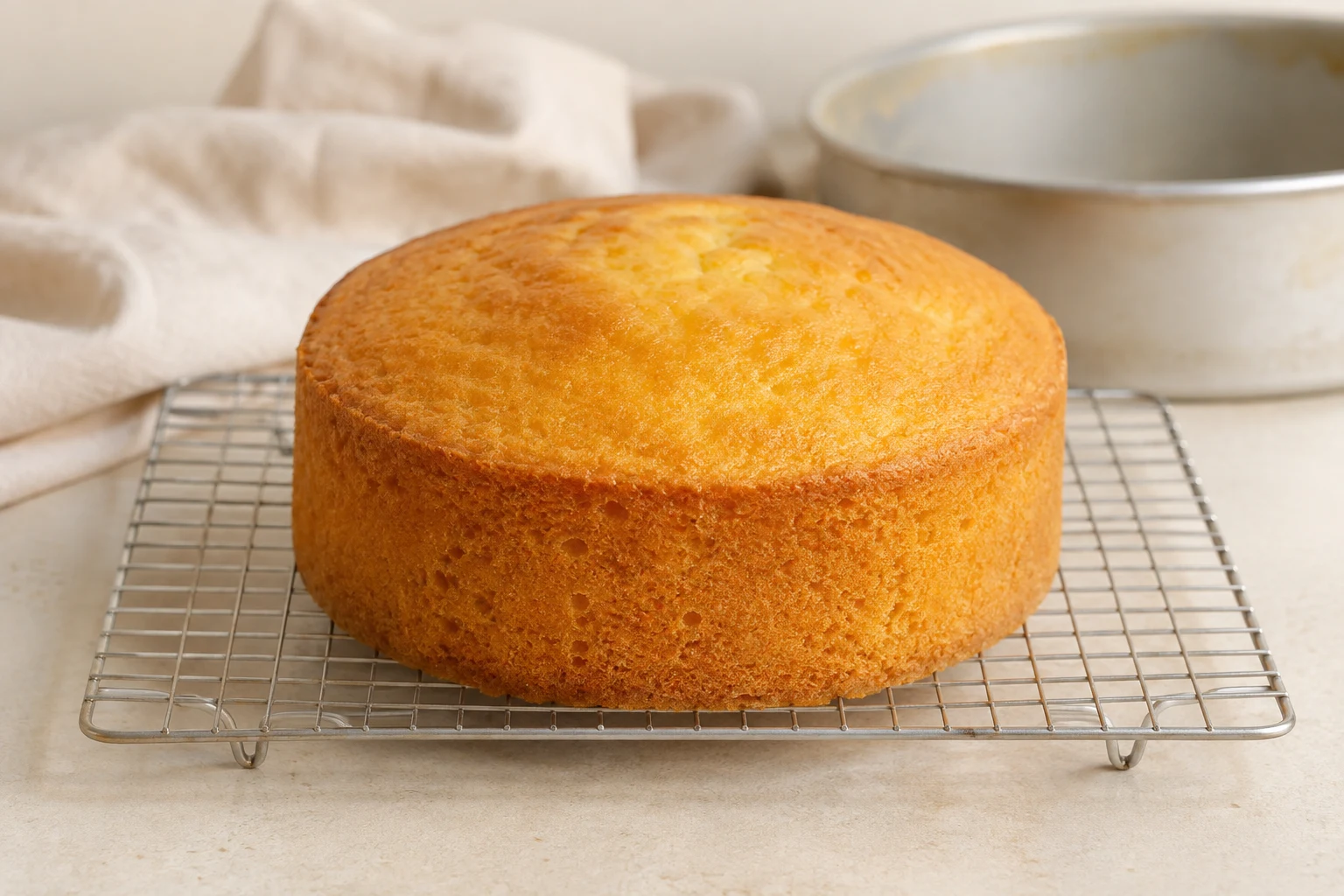
Pause long enough to identify the disagreement:
- The tester is clean but the center looks unset: check a nearby central spot and compare the surface with the recipe's description.
- The reading seems low but other cues agree: confirm probe position, the thermometer's instructions and any recipe-specific target.
- The top has colored but wet batter remains: continue baking and recheck the center; color alone is not the endpoint. Follow any recipe-specific instruction for shielding the top if it browns too quickly.
- The cake keeps taking longer than expected: record the pan, batter depth and oven setting before assuming the written time is exact for your setup.
These are practical checks, not a diagnosis from a single photograph. Our basic baking techniques guide covers oven preparation and measuring.
Once the cake meets its recipe's doneness cues, follow the specified cooling and unmolding instructions. For the next bake, keep notes on the actual time, pan and checks that agreed. Those notes are more useful than carrying one temperature or minute count across every cake you make.