Measuring flour starts with the recipe's own instructions. If it provides grams, weigh that amount. If it gives cups only, check the author's measuring method before filling the cup. A tightly scooped cup can contain more flour than a lightly filled one, which makes the same recipe behave differently.
This guide covers measuring flour before mixing. It does not replace a recipe's advice about adding extra flour during kneading or adjusting a particular dough.
Weigh the amount the recipe actually gives
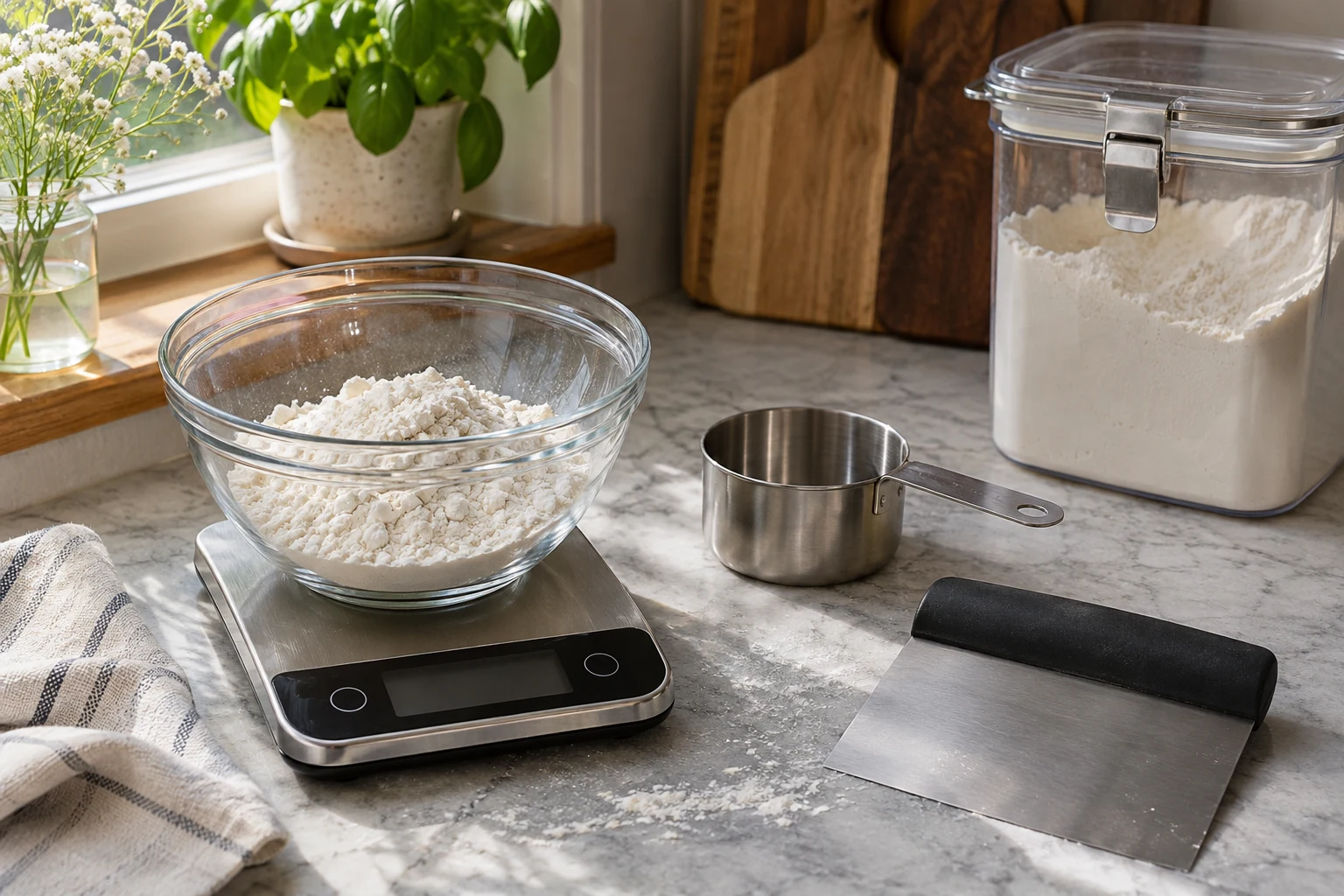
Set a kitchen scale on a firm, level surface and select grams. Place an empty bowl on it, then press tare so the bowl's weight is excluded. Add flour gradually until the display reaches the recipe's stated weight. Remove a little if you overshoot, rather than deciding that a large extra scoop cannot matter.
King Arthur Baking recommends weighing flour and explains how to tare the bowl. Its own all-purpose flour convention is 120 grams per cup. That is the publisher's convention, not a universal conversion for every flour or recipe. If another recipe specifies 125 grams for its cup, follow its written grams rather than silently changing the formula.
Keep the ingredient line visible while measuring. Flour for the main mixture and flour reserved for dusting may be separate amounts.
Without a scale, fluff, spoon and level
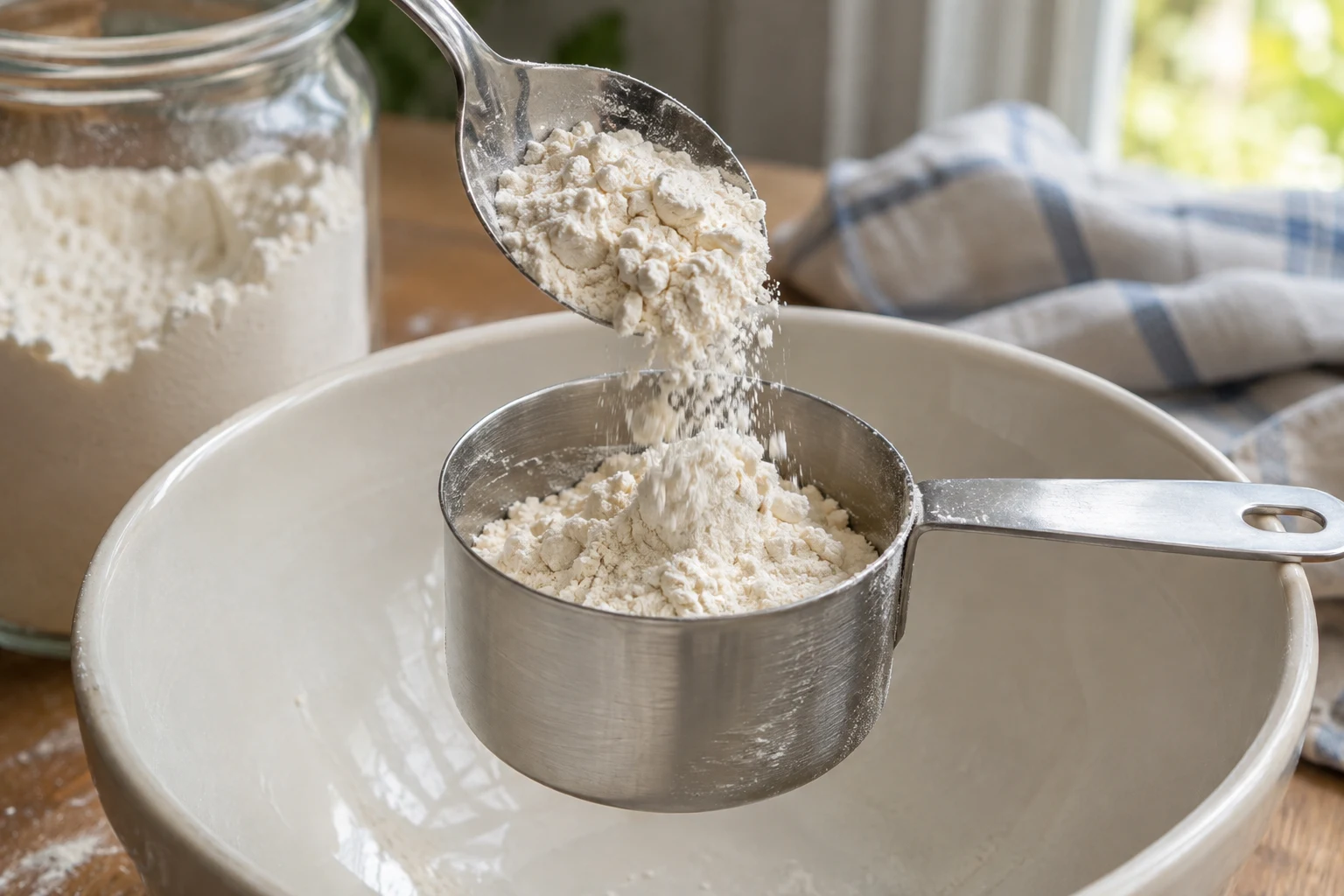
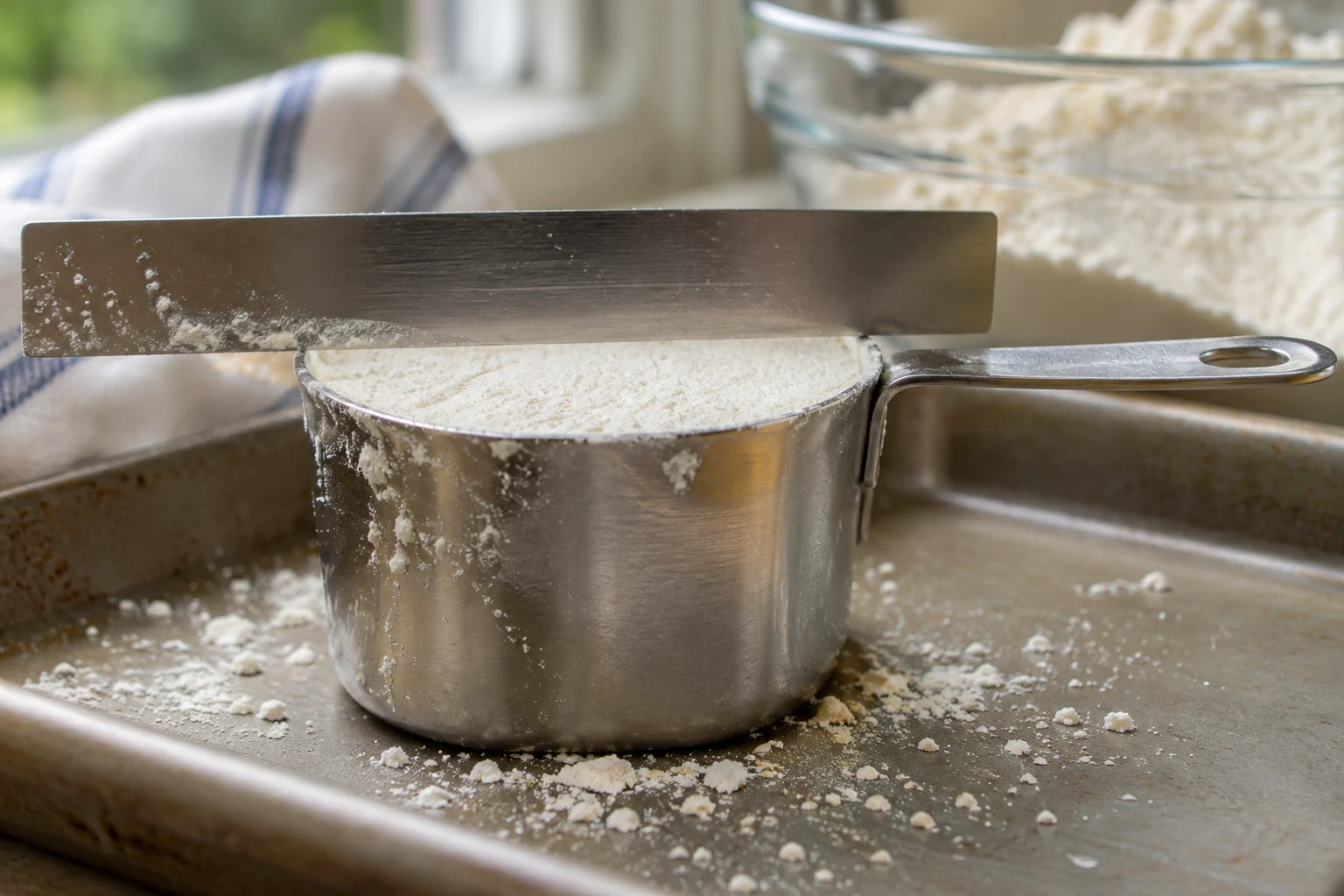
Use a dry measuring cup with a rim you can level across. Stir the flour in its container to loosen it. Spoon flour gently into the cup until it is slightly overfilled, without pushing it down. Sweep a straight edge across the rim and return the excess to the container.
Avoid tapping the cup on the counter to make more room. Do not compress the flour with the spoon. Home Baking Association's measurement teaching materials distinguish these filling methods because they can produce different amounts.
Follow an explicitly different method if the recipe developer specifies one. Consistency with the recipe matters more than applying one conversion to every source.
Check special wording before filling the cup
“One cup sifted flour” and “one cup flour, sifted” can indicate a different order. Read the method for clarification: does the author want flour sifted before measuring, or the measured flour sifted afterward? If that remains unclear, use the recipe's stated weight when available.
Do not substitute a different flour just because its measured volume looks similar. Whole-grain flour, almond flour and a gluten-free blend are different ingredients. A scale measures quantity; it does not make ingredients interchangeable.
If the mixture still looks wrong
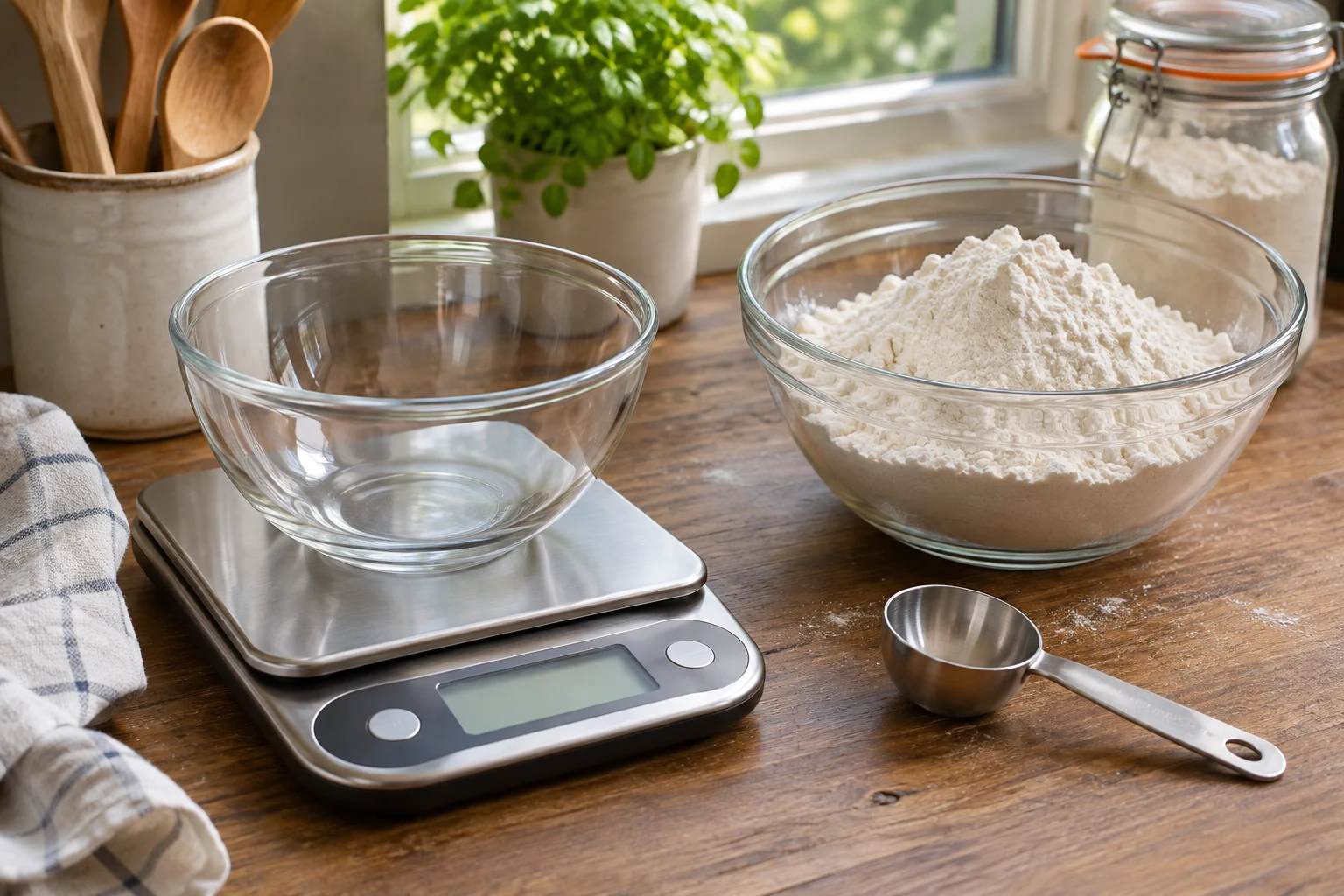
Pause before adding another cup. Recheck the flour type, the quantity, the scale unit and whether the bowl was tared. Then check the liquid quantities and mixing stage. A thick batter is not automatically a measuring error, and a sticky dough may be correct for its recipe.
For the next batch, record the recipe, flour and measuring method together. That gives you a useful comparison without claiming every problem comes from flour.
Recipes to practice with
Choose one recipe and follow its own ingredient quantities and mixing instructions. These published bakes use flour in different mixtures:
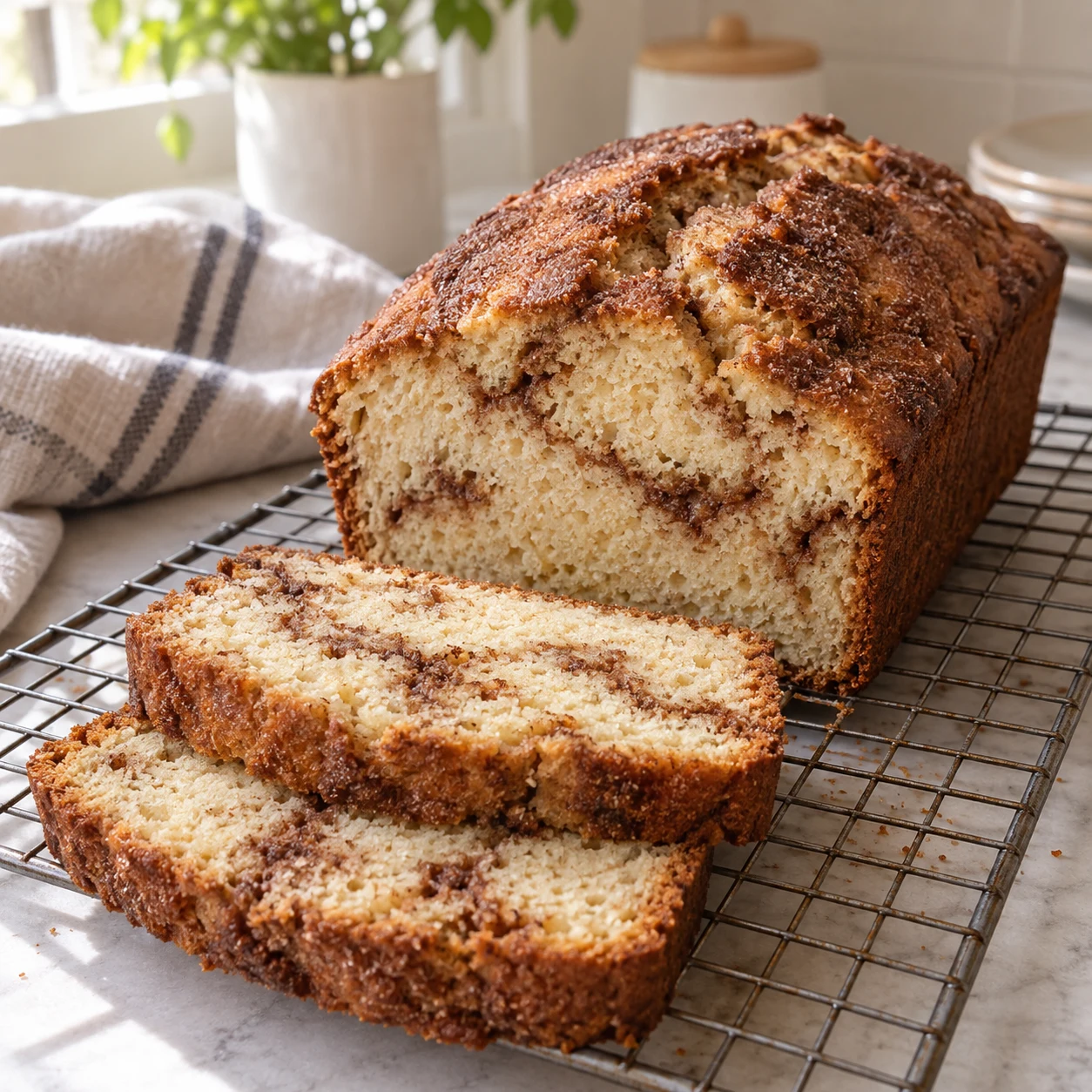
- Cinnamon Swirl Quick Bread Recipe - Easy & Moist
- Lemon Blueberry Muffins with Maple Glaze Recipe
- Honey Oatmeal Raisin Cookies
- Buttermilk Biscuits for Beginners
Source notes: King Arthur Baking's flour-measuring guidance and Home Baking Association's Measurements Matter materials inform this preparation guide. Physical baking tests are deferred; the photographs are AI-generated editorial illustrations.