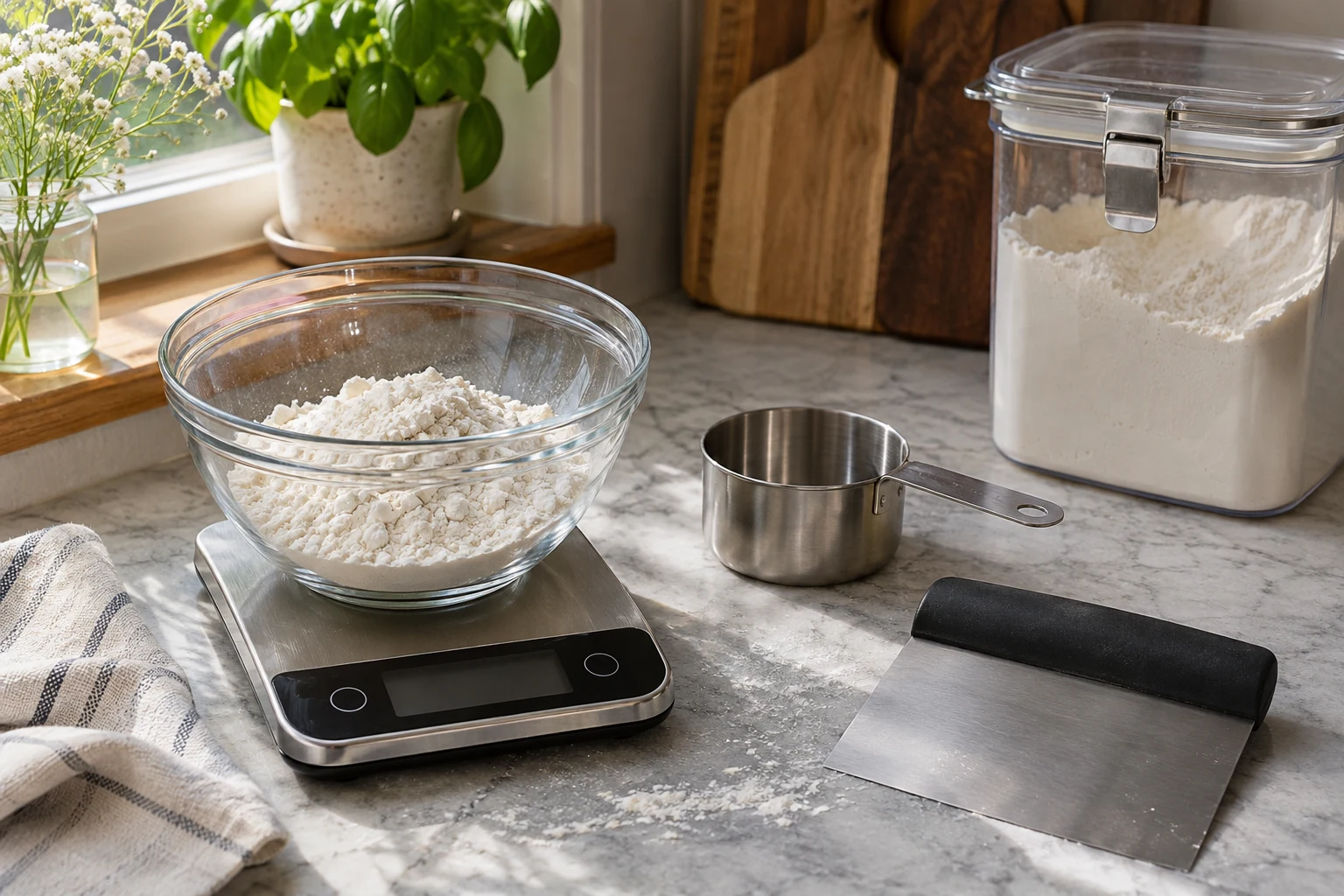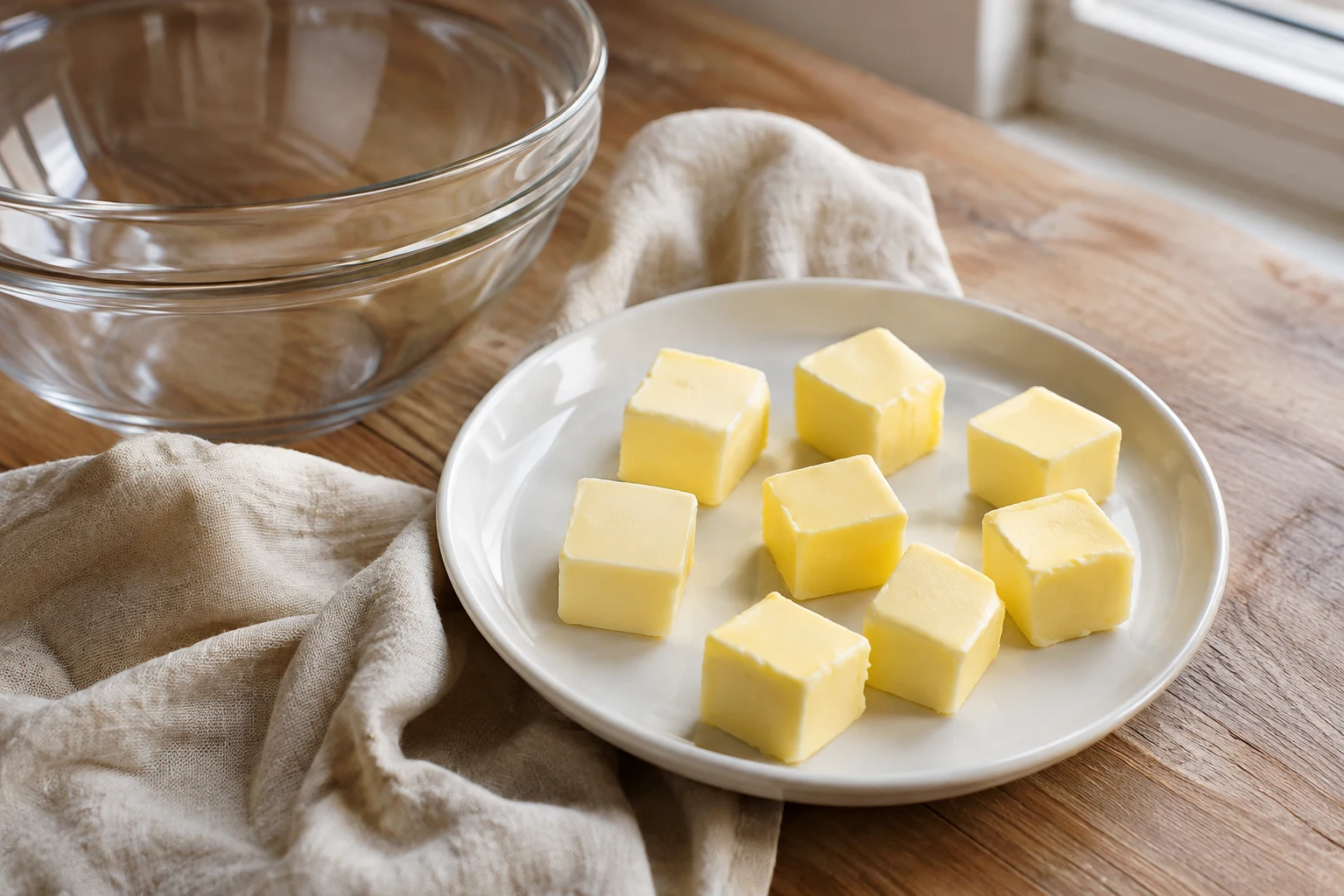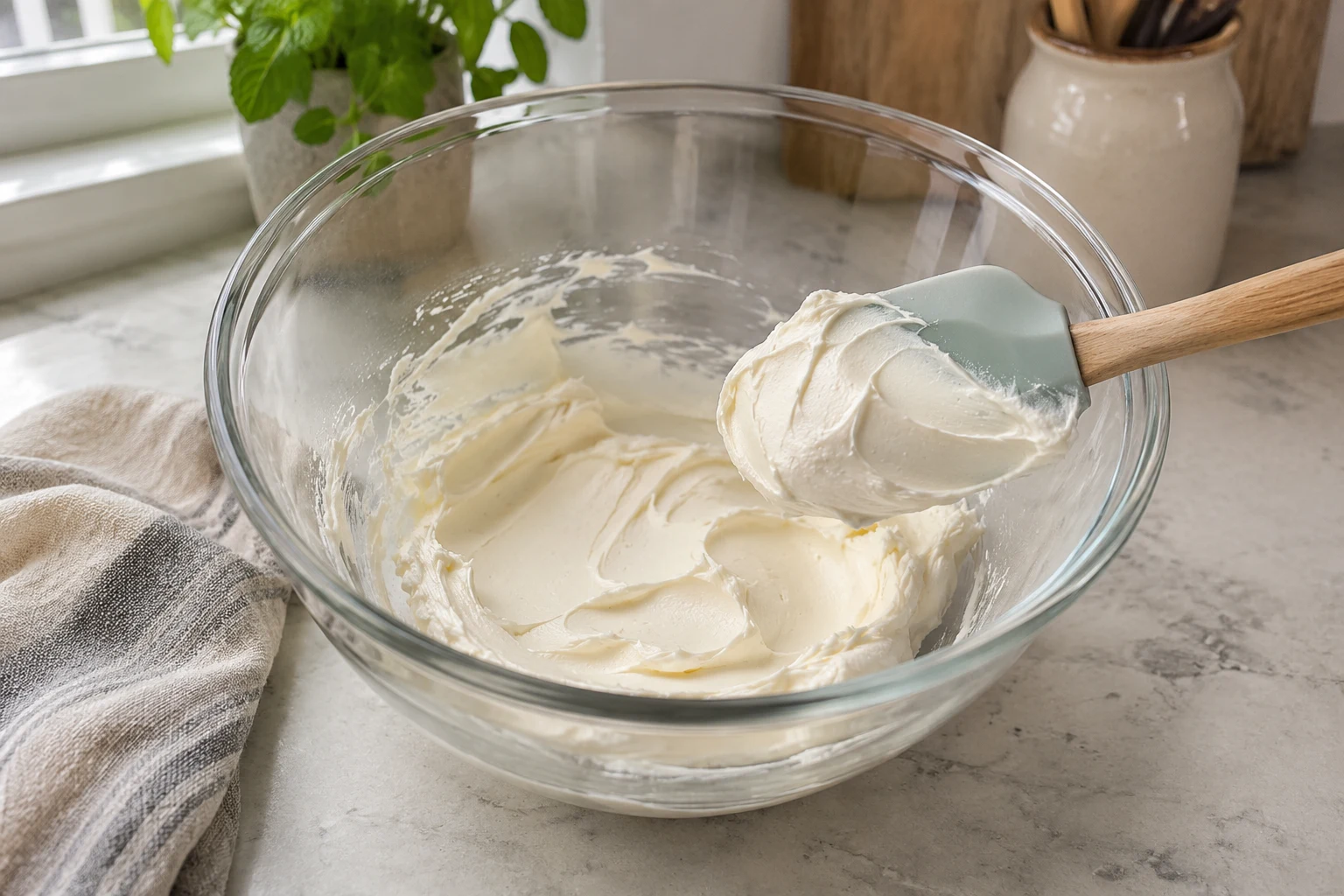
Cream cheese lumps are easier to prevent at the start of a filling than to chase after every ingredient is in the bowl. Pause before the next addition: check the cheese itself, then check the bottom and sides of the bowl. More mixing is not always the answer, especially once eggs or whipped cream have been added.
Read the cream cheese instruction first
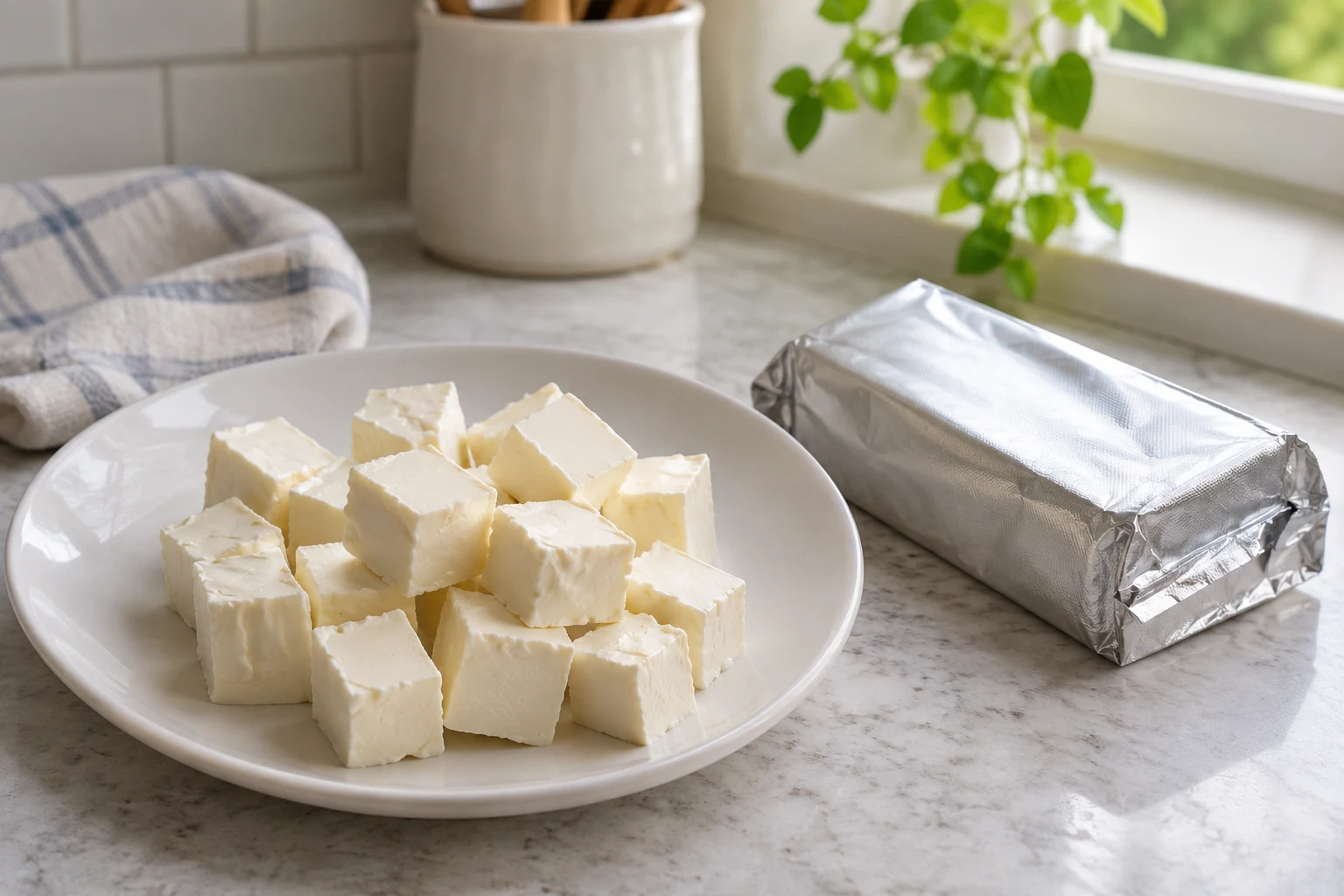
Use the type and amount the recipe specifies. A tub of spreadable cream cheese is not automatically interchangeable with a block; check the recipe before substituting. If the instruction says softened, the cheese should yield readily to a spatula rather than remain a cold, rigid lump. Softened does not mean hot or melted.
Keep softening brief and include all preparation time in safe handling limits. FDA guidance calls for refrigeration at 40°F (4°C) or below and no more than two hours out of refrigeration for perishables, reduced to one hour above 90°F (32°C). These are maximum limits, not suggested softening times. Return the filling or finished dessert to refrigeration promptly, following its recipe.
Read the other ingredients separately. The lemon-blueberry tart below uses softened cream cheese but cold heavy cream, whipped in another bowl. Warming that cream to match the cheese would ignore the recipe’s method.
Smooth the base before the next addition
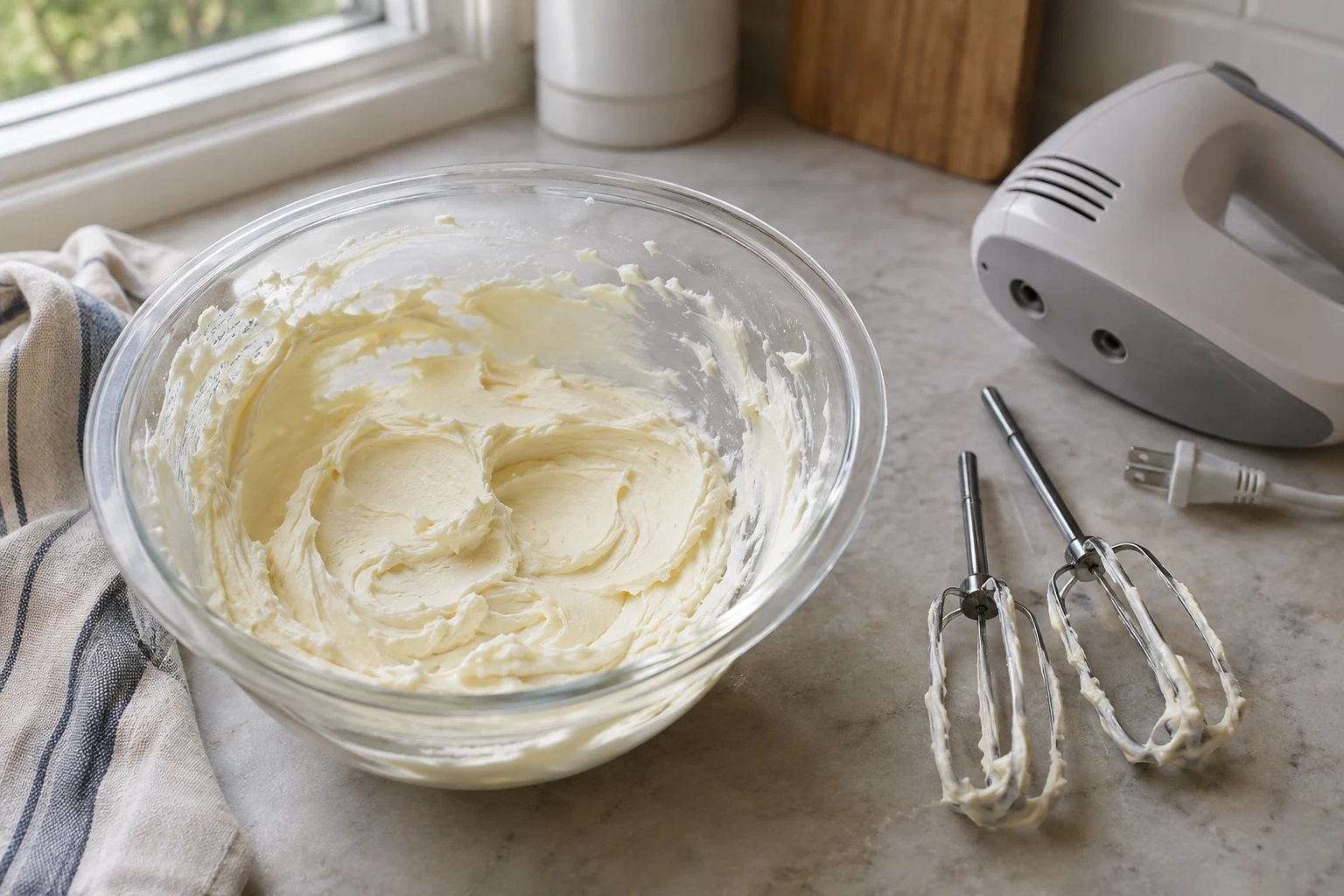
Work through the recipe in order. Where it asks you to beat cream cheese until smooth before adding sugar, lemon juice or other filling ingredients, finish that stage first. Check a small smear with the spatula: visible firm pieces in the cheese base need attention before you dilute it with the next addition.
Use the recipe’s mixer setting. King Arthur Baking recommends gentle mixing for baked cheesecake fillings to limit incorporated air; that is not an instruction to rewrite every no-bake method. Once whipped cream is folded in, preserve the folding step rather than beating the whole filling to remove an earlier lump.
Keep intentional additions in mind. Chocolate swirls, berries and zest are not cream cheese lumps. The chocolate-peanut butter bars deliberately leave chocolate partly swirled through the filling.
Stop and scrape the hidden corners
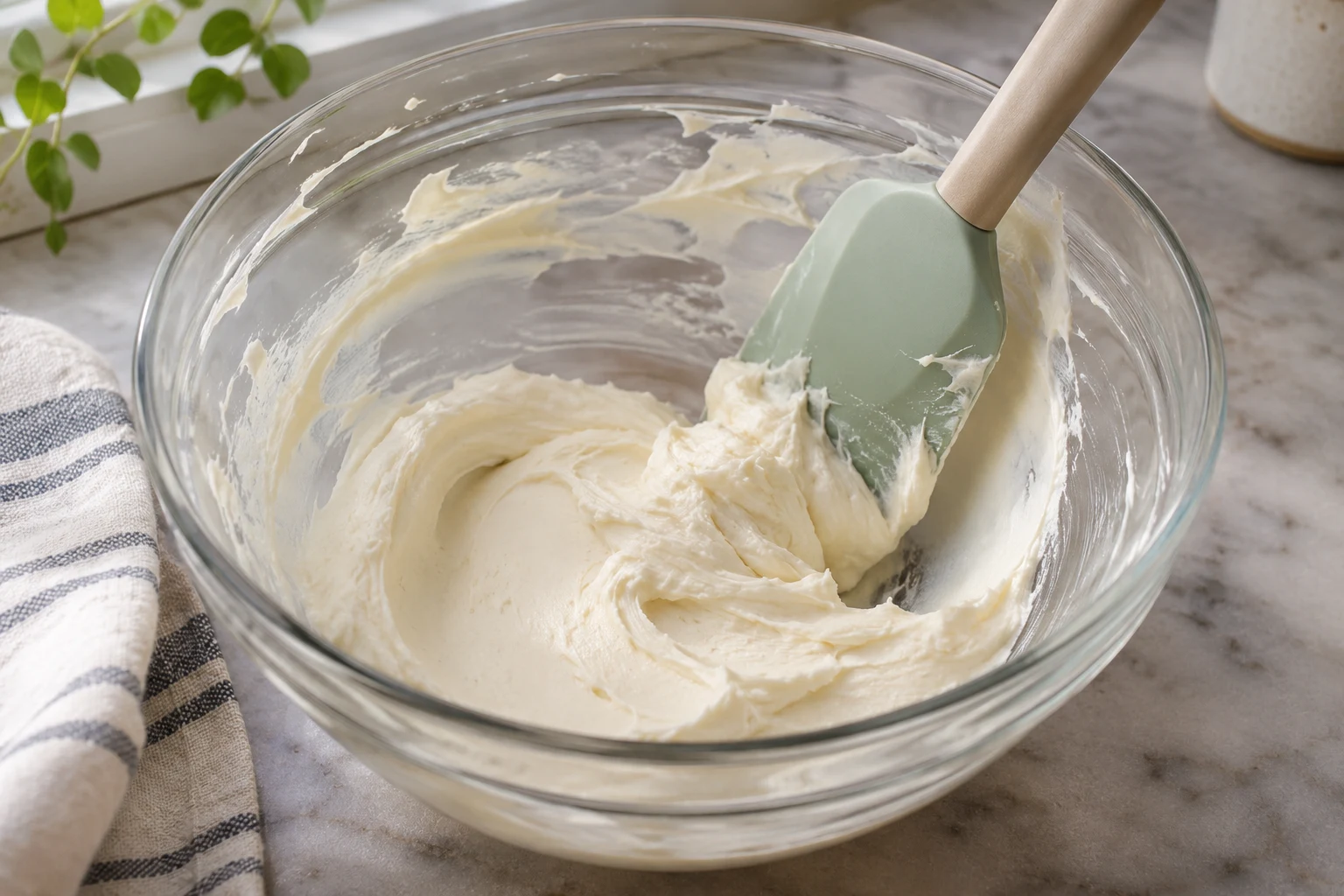
Turn off the mixer before putting a spatula into the bowl; unplug a hand mixer before handling its beaters. Scrape down the sides and across the bottom, bringing any untouched cheese back into the mixture. Resume the recipe’s mixing briefly and check again before proceeding.
If everything is already combined, stop adding ingredients and reread the method. Do not add unmeasured milk, heat an egg-containing filling on the counter, or assume baking will remove lumps. Keep the mixture within safe handling limits. Raw filling containing eggs should not be tasted to check it.
For next time, the useful checkpoint is simple: smooth cheese, scraped bowl, then the next ingredient. It is easier to see the problem at that stage.
Recipes with a cream cheese mixing stage
These recipes use softened cream cheese, but their later steps differ. Keep whipped cream separate where directed; for the cupcakes, apply this check to the frosting and let the cakes cool before frosting.
- Easy No-Bake Strawberry Cheesecake Bars with Almond Crust
- No-Bake Lemon Blueberry Cheesecake Tart with Graham Cracker Crust Recipe
- Easy No-Bake Chocolate Peanut Butter Cheesecake Bars Recipe with Crunchy Graham Cracker Crust
- Easy Lemon Poppy Seed Cupcakes with Light Cream Cheese Frosting
Source basis: King Arthur Baking’s cheesecake and bowl-scraping guidance; FDA refrigerated-food handling guidance. This is a source-based guide, without an in-house baking trial. Photographs are AI-generated editorial illustrations.