When a recipe asks for room-temperature eggs, a short bath in warm water can take the refrigerator chill off intact eggs. It is a preparation step for the bake you are making, not permission to store eggs on the counter.
This source-based guide draws on King Arthur Baking’s egg-temperature guidance and FDA food-handling advice. The photographs are AI-generated editorial illustrations; this method has not been tested in our kitchen.
Read the egg instruction before warming
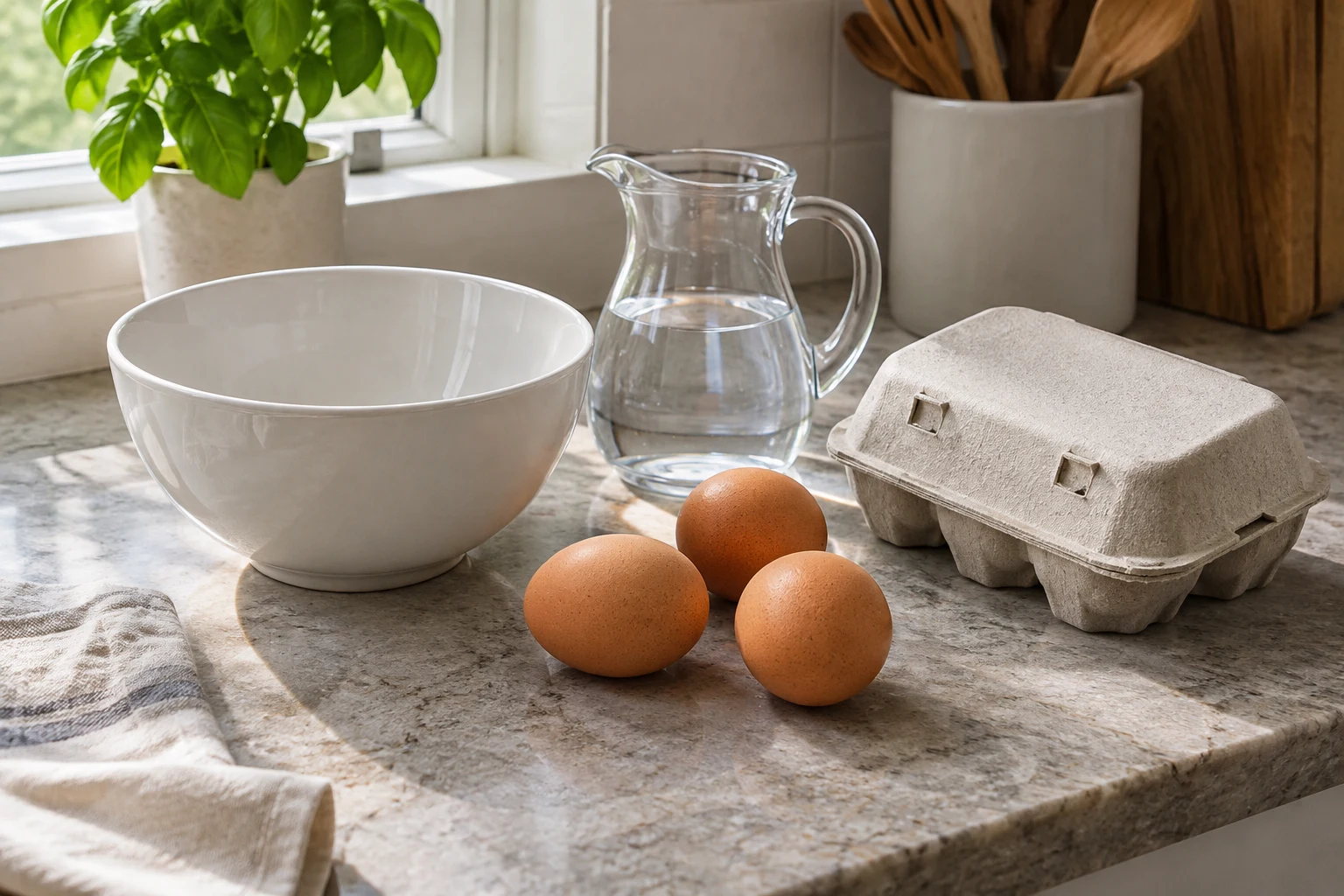
Check the ingredient list and mixing steps first. Some recipes specify room-temperature eggs; others work with cold eggs or deliberately keep ingredients cold. Warming every egg automatically can move you away from the recipe’s intended starting conditions.
King Arthur Baking explains that the importance depends on the recipe: cold eggs can affect a mixture containing softened butter, while some other batters are more forgiving. Keep the recipe’s egg size, number and mixing method unchanged. If it supplies an actual temperature, use that instruction rather than guessing from a clock.
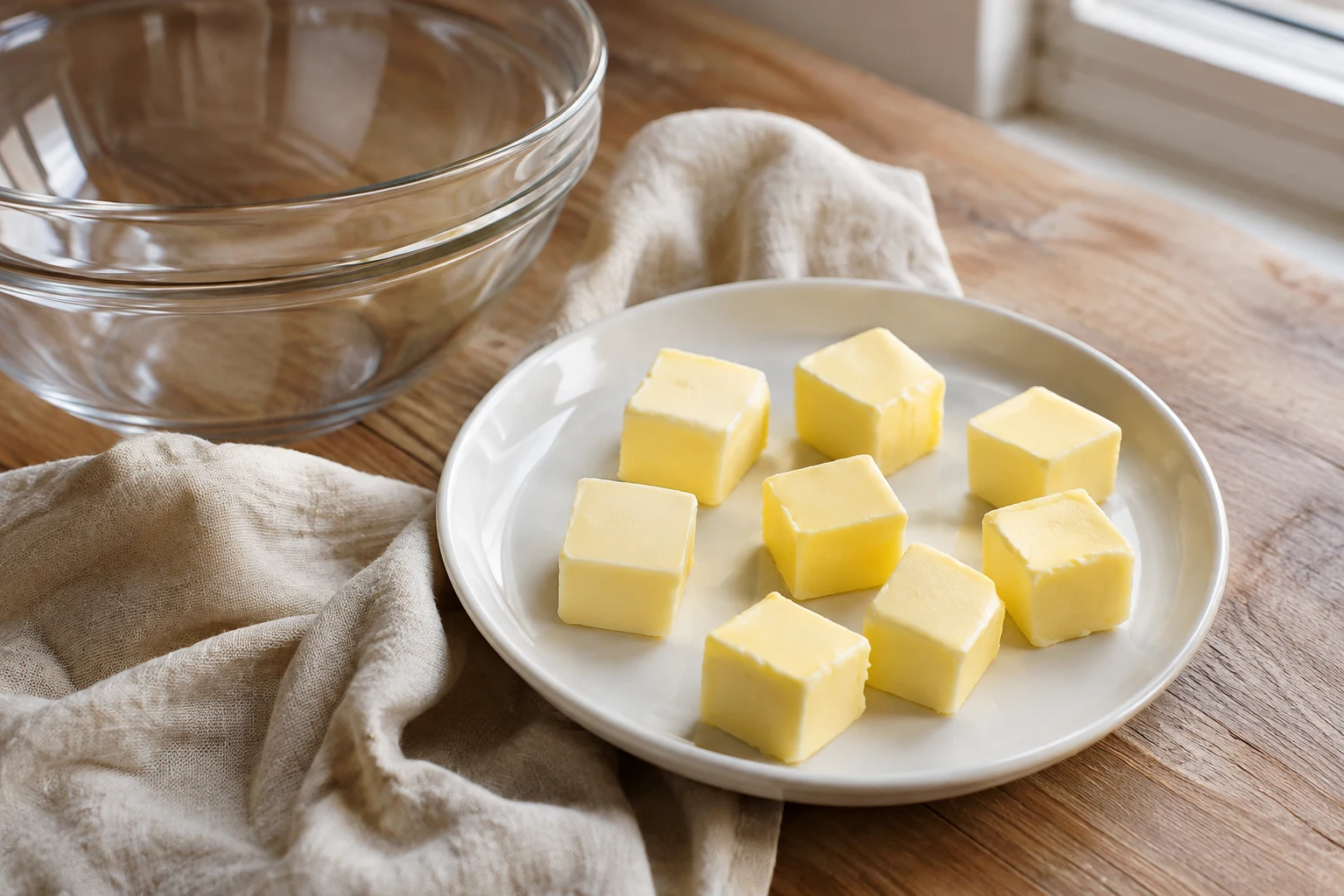
Preparing eggs and butter are separate jobs. Our butter-softening guide covers keeping butter pliable without turning it into a liquid. Do not use a warm egg bath to heat butter or other ingredients together.
Use warm water for intact eggs
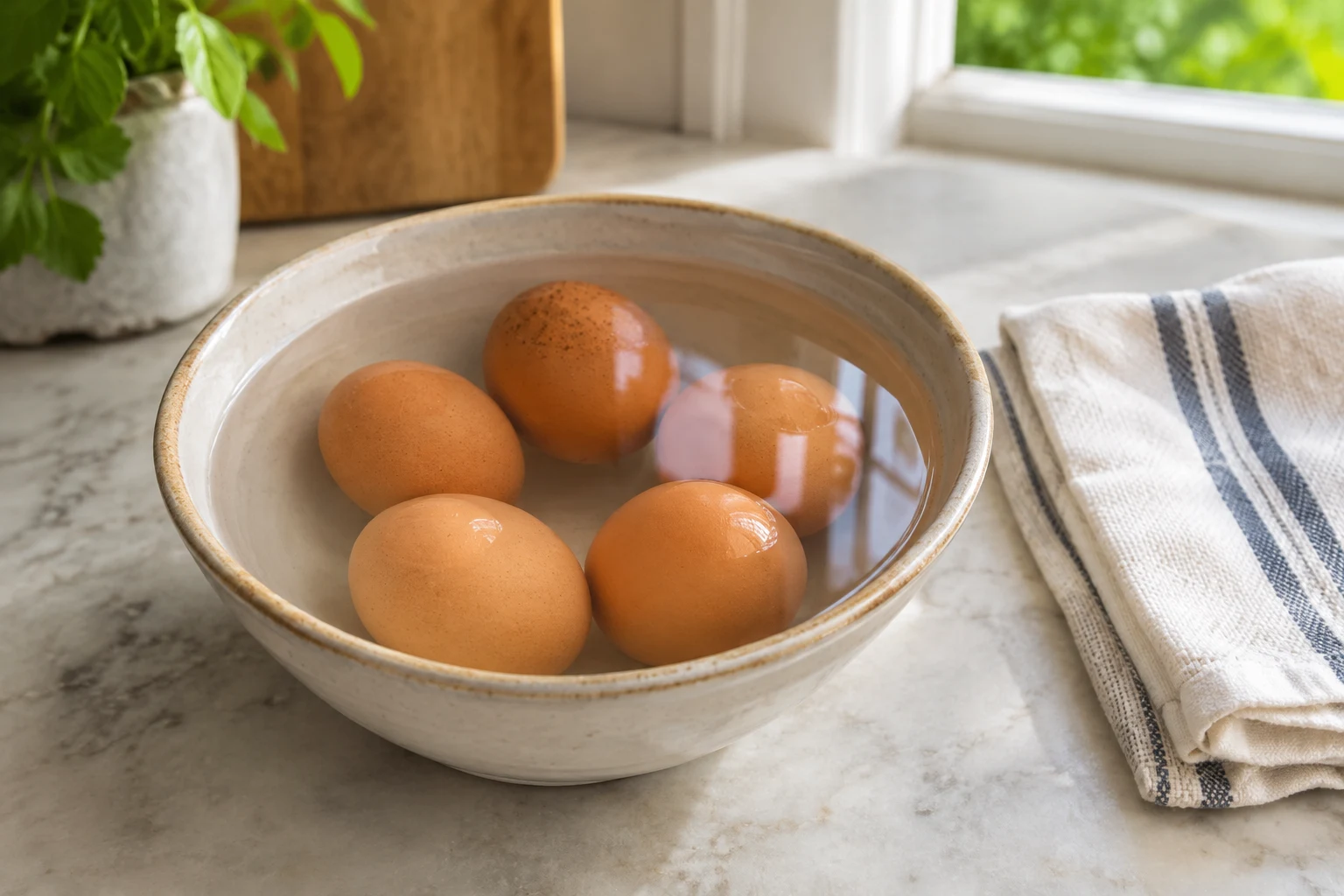
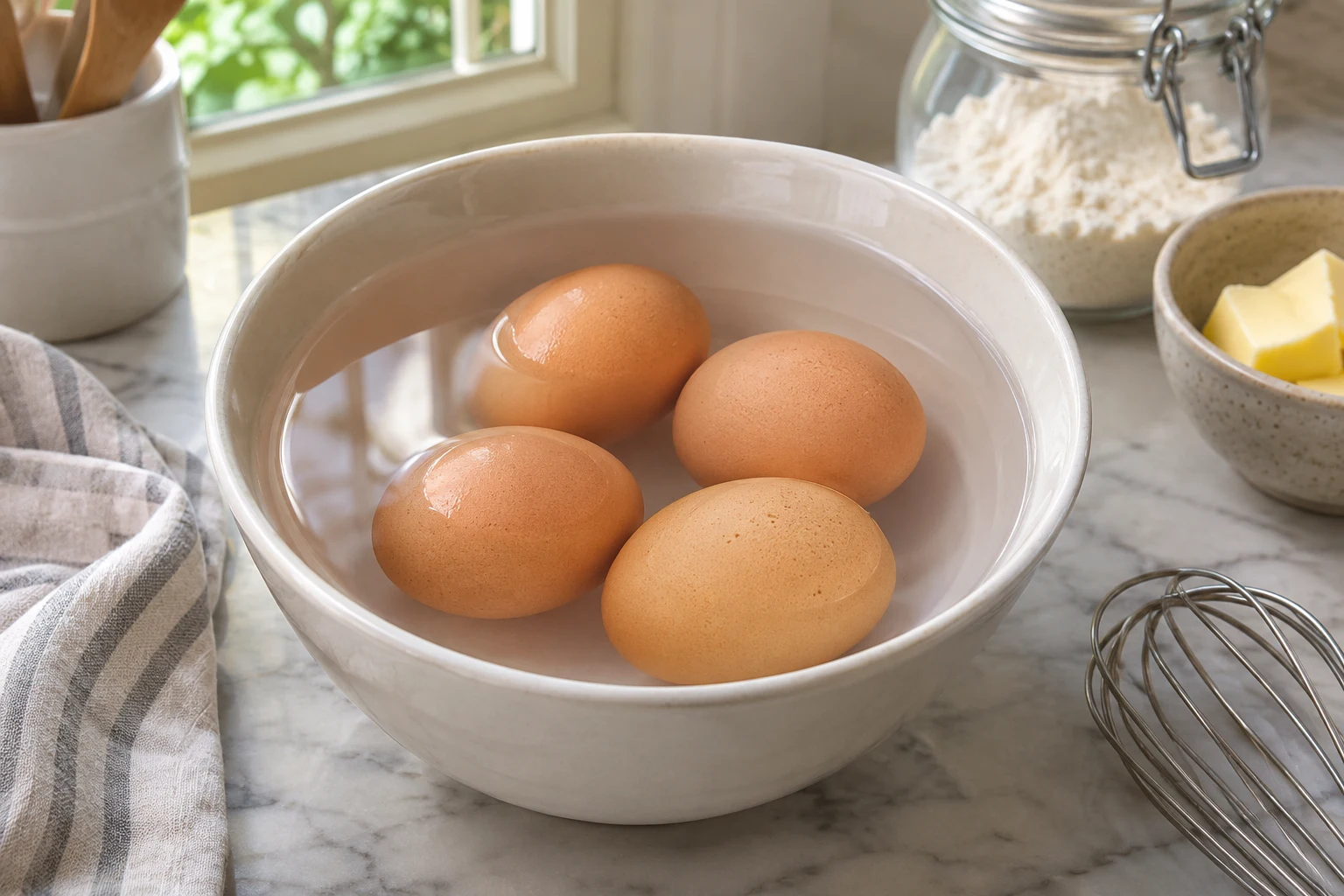
Put the eggs needed for the recipe in a clean bowl and cover them with warm tap water. Use water that is comfortably warm rather than boiling or scalding. King Arthur Baking suggests a brief bath of about 10 minutes. This is a practical starting point, not proof that every egg has reached an identical internal temperature.
Keep the shells intact during this step; do not pour bath water into cracked eggs. Set out your mixing bowl and measured ingredients while you wait so the eggs can go straight into the recipe. There is no need to leave a carton out overnight or warm more eggs than you need.
If a recipe separates yolks and whites, King Arthur Baking notes that eggs separate more easily cold. Follow that recipe’s separation and warming directions; do not try to separate eggs while they are sitting in the bath.
Dry, crack and use the eggs promptly
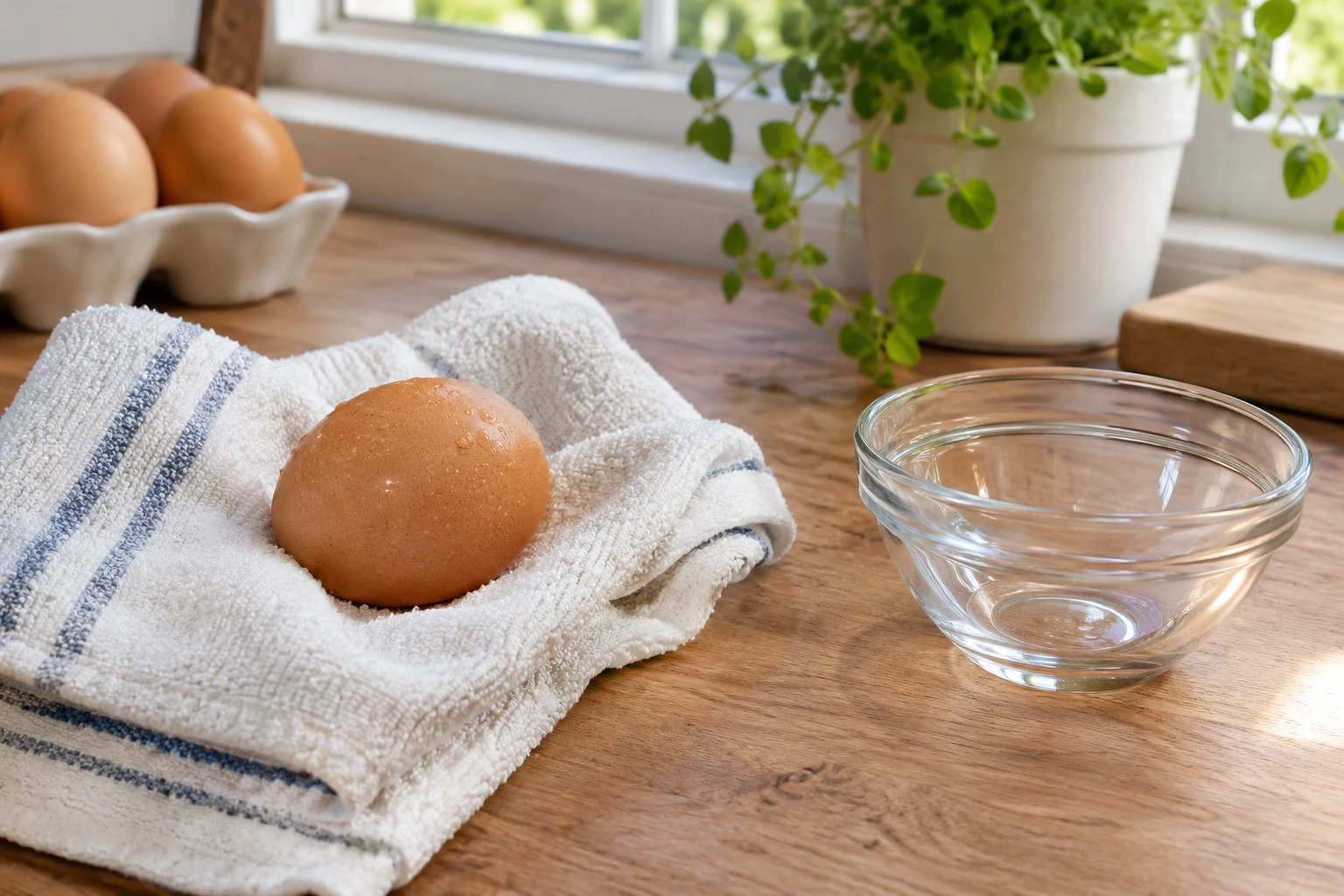
Lift the eggs out, dry the shells with a clean towel and discard the bath water. Crack each egg into a small clean bowl before transferring it to the mixing bowl, making it easier to remove any shell fragments. Wash hands, utensils and work surfaces after handling raw eggs.
FDA advises keeping refrigerated eggs at 40°F (4°C) or below. Do not leave eggs requiring refrigeration out for more than two hours, or one hour when the temperature exceeds 90°F (32°C); count all preparation time, not just the bath. Use warmed eggs promptly. A warm-water bath does not pasteurize eggs or make raw batter safe to taste. FDA also warns against tasting uncooked flour mixtures.
Recipes that specify room-temperature eggs
These four recipes explicitly request room-temperature eggs. Read the complete recipe before beginning: the madeleines use melted, cooled butter, while the cakes and biscotti have their own mixing sequences. Warming the eggs does not replace those steps or their baking checks.