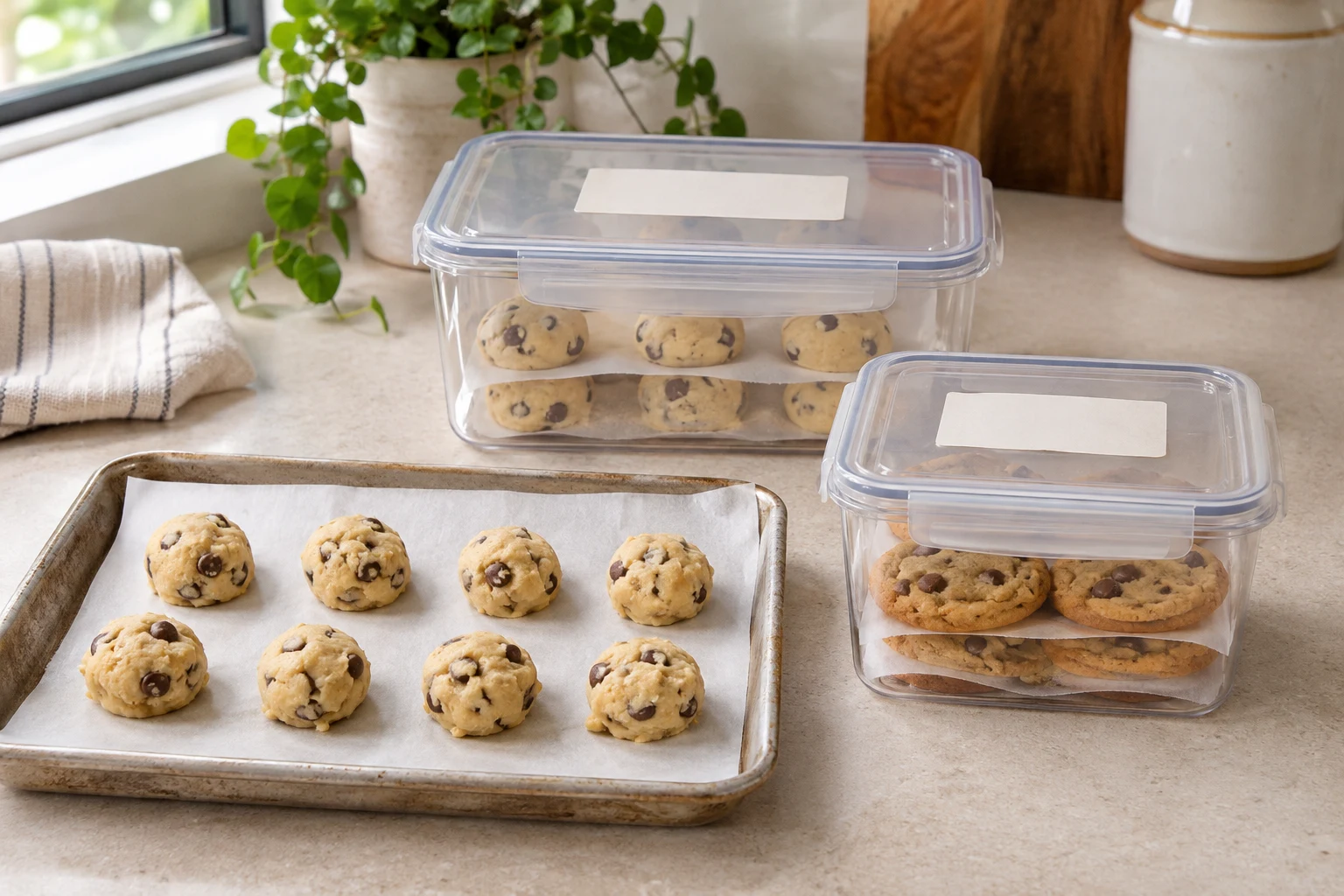
Freeze cookie dough when you want to bake later; freeze baked cookies when you want most of the work finished in advance. The useful method depends on the cookie's shape, recipe and decoration.
Start with your recipe's make-ahead instructions. A method for scooped dough does not automatically apply to a rolled sheet, a filled cookie or a decorated cookie.
Should you freeze the dough or bake first?
| Your goal | Option to consider | What remains to do |
|---|---|---|
| Bake a few cookies at a time | Individually portioned dough | Follow the recipe's frozen-dough or thawing directions, then bake |
| Roll and cut shapes on another day | Wrapped portions of cutout dough | Thaw in the refrigerator, then roll, cut and bake |
| Have plain cookies ready for later | Completely cooled baked cookies | Thaw and decorate if needed |
| Prepare decorated gifts | Follow guidance for the exact icing and cookie | Check appearance and handling separately from the plain-cookie method |
King Arthur describes making dough ahead and freezing plain baked cutouts before decorating as ways to divide the work. Choose the stage that fits the time and equipment you will have later.
How to freeze cookie dough balls
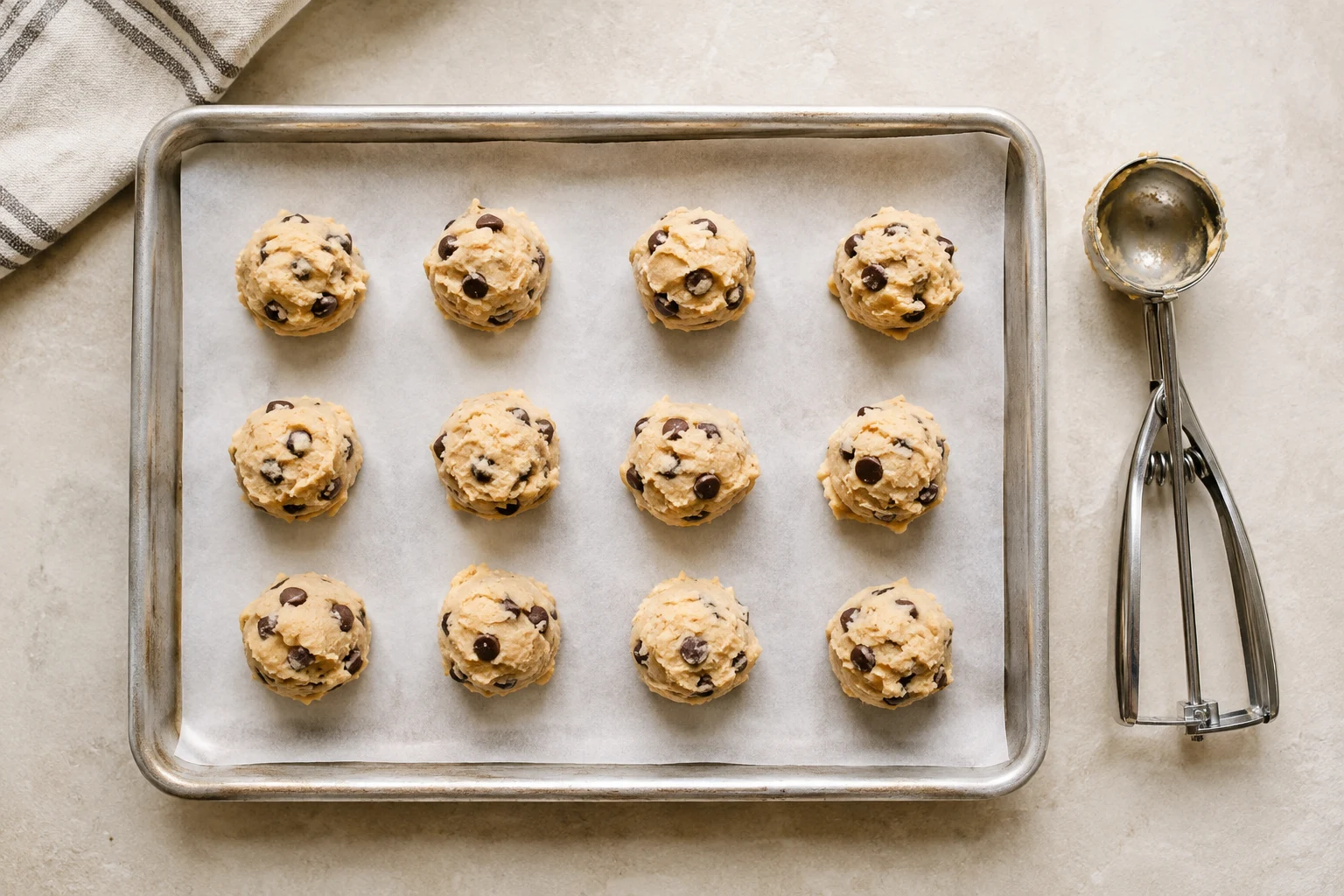
For a drop-cookie recipe suitable for freezing:
- Make the dough and complete any rest the recipe requires.
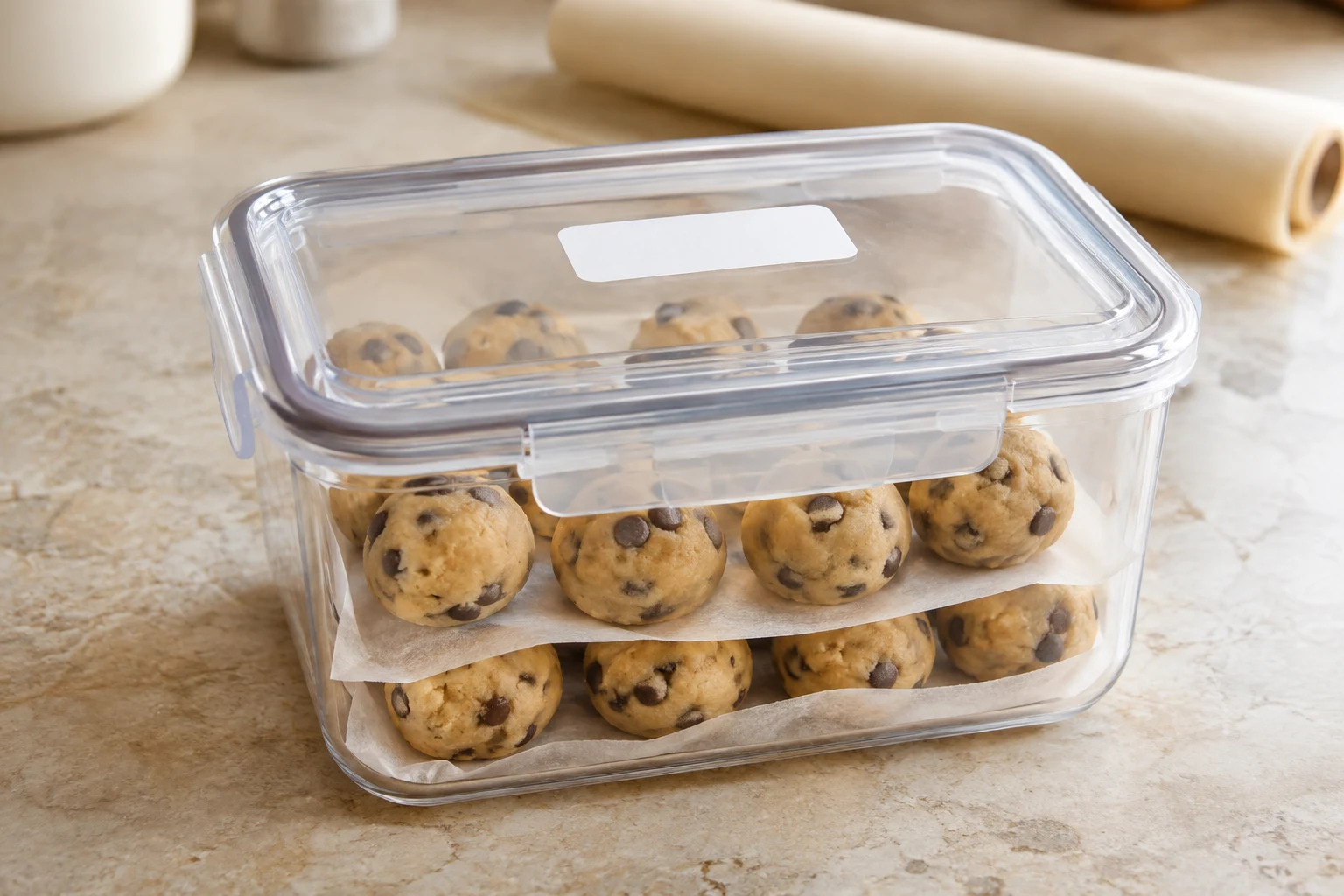
- Scoop consistent portions onto a parchment-lined tray that fits your freezer, leaving the pieces separate.
- Cover and freeze until the portions are firm enough to transfer without losing their shape.
- Move them to a freezer-safe container or bag, press excess air out of a bag without crushing the dough, and seal it well.
- Label the package before returning it to the freezer.
Betty Crocker's method freezes shaped portions separately before transferring them to a container. This makes it possible to remove portions individually later.
For the label, record the recipe name, date, portion size and where to find the baking instructions. Add the oven temperature and whether the recipe calls for thawing or baking from frozen. Do not rely on a handwritten bake time without the corresponding recipe and doneness cues.
What about cutout cookie dough?
Keep the method distinct from scooped cookies. Sally's Baking describes wrapping flattened dough portions, freezing them, then thawing the wrapped dough in the refrigerator overnight before rolling and cutting.
Our sugar cookie cutouts illustrate the mixing, rolling and baking stages. That recipe does not currently include dough-freezing instructions. If you need a make-ahead method with a specified storage period, choose a recipe whose author supplies freezing directions. A general method does not guarantee identical shape or texture for every sugar-cookie formula.
Can you bake dough straight from frozen?
Some recipes support it; others specify thawing first. Sally's guide gives bake-from-frozen instructions for drop cookies, while Betty Crocker's guide includes a thawing step. Follow the method attached to your recipe rather than combine instructions from different formulas.
If there are no freezing instructions and timing matters, choose a recipe that provides them. If you are experimenting for your own use, try a few portions first and record their starting condition, portion size, bake time and finished result. Do not assume one extra-minute rule works for every dough.
Why does frozen dough spread differently?
Temperature is one variable worth recording. King Arthur's chilling experiment found different spread from colder versus freshly mixed dough. That experiment does not establish the outcome of freezing every formula.
Compare like with like: use the same recipe, portions, sheet and oven setup. Record whether the dough was frozen, refrigerated or thawed. Otherwise, you will not know which change mattered. Do not press every frozen dough ball flat or raise the oven temperature as a universal correction.
How to freeze baked cookies
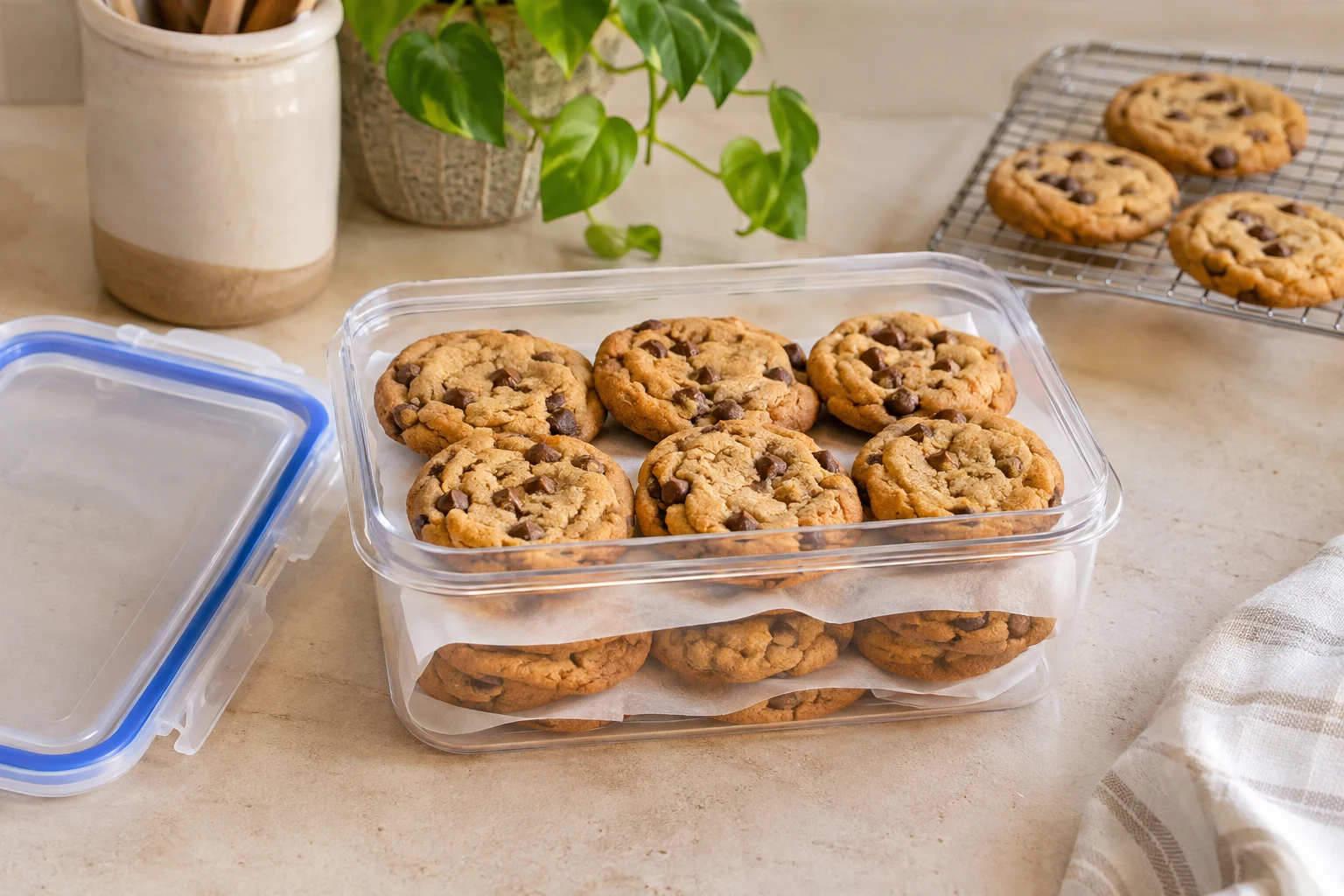
Let plain cookies cool completely before packing. Protect them in a freezer-safe container, separating layers so they do not stick or break, and label the date. Betty Crocker describes this layered packing method and notes that freezing can affect the appearance of decorated cookies.
For most plain baked cookies, Betty Crocker recommends thawing in the covered container at room temperature; it distinguishes crisp cookies, which it advises removing from the container to thaw. Use the guidance for the cookie you made. This is different from thawing raw dough.
This guide's plain-cookie method does not cover custard-filled cookies, royal-icing decorations or every frosting. Use instructions specific to the filling or decoration. See our baked-goods storage overview for other types of baking.
Storage time and safe handling
Sally's published guide recommends up to three months for the dough types it discusses. Treat that as attributed guidance, not a BeginnerBakes-tested quality guarantee for every formula. Follow a shorter recipe-specific recommendation where given.
Keep your freezer at 0°F (−18°C) or below. When dough needs thawing, use the refrigerator rather than leaving it on the counter; keep the refrigerator at 40°F (4°C) or below.
Frozen dough is still raw dough. Do not taste it: raw flour and eggs can carry harmful germs. Bake according to the recipe or package and clean hands, utensils and surfaces after handling it.