Beginnerbakes

Quick Breads

Classic British Oatcakes with Savory Herb Butter - Easy Beginner Recipe

By Beginnerbakes Test KitchenReviewed by Beginnerbakes Editorial TeamPublished Apr 25, 2026 · Updated May 12, 2026
British 25 mins beginner-friendlyeasystep-by-stepclassicsavory-bakesminimal-ingredientscomfort-foodpartysnackmorning-bakequick-breadtraditional-britishhomemade-butter

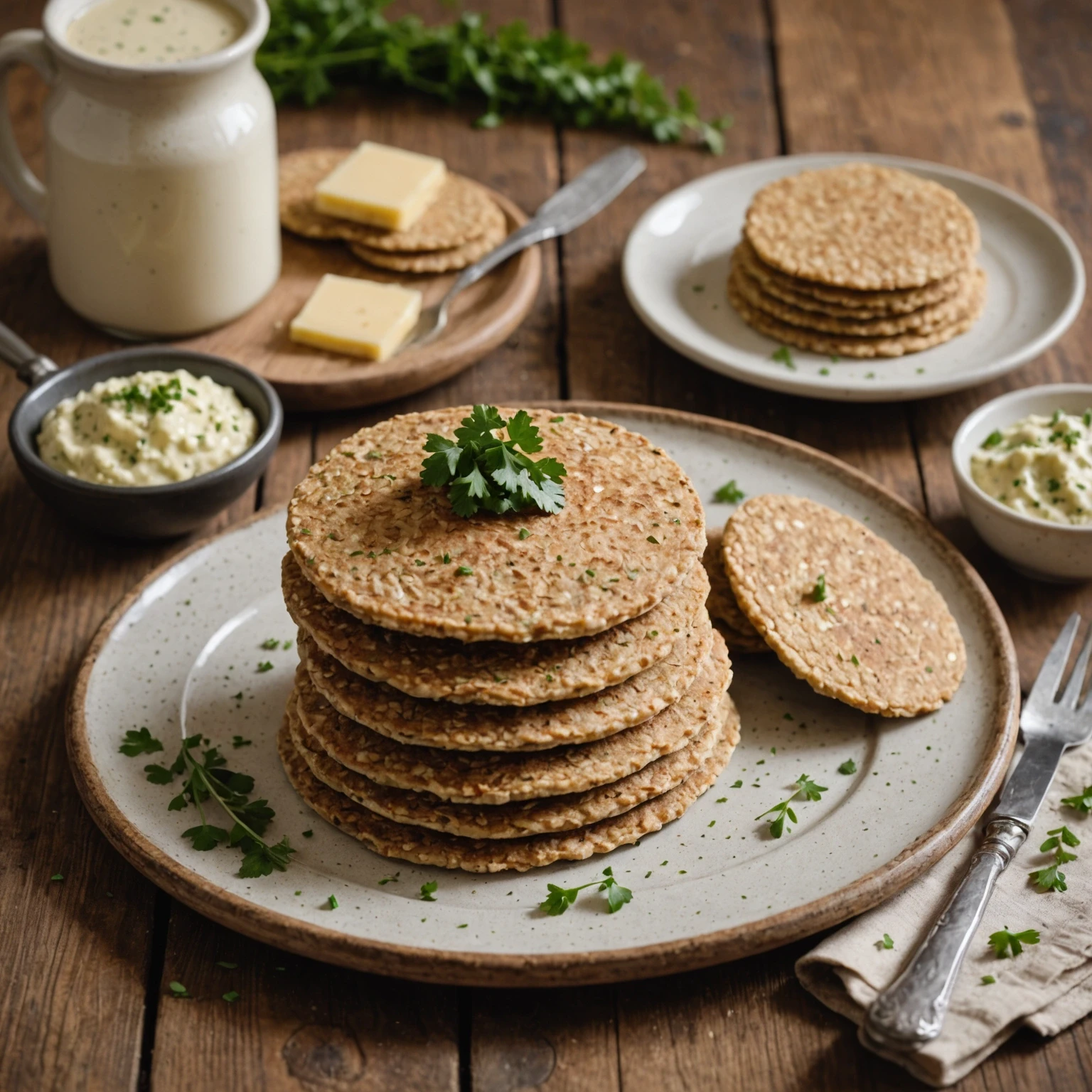
Make traditional British oatcakes with this simple and easy recipe. These crispy and tender oatcakes are made from rolled oats and flour, cooked on the stovetop, and served warm with flavorful savory herb butter. Perfect for beginner bakers looking for a quick bread snack or breakfast that’s delicious and comforting.

Classic British Oatcakes with Savory Herb Butter - Easy Beginner Recipe
Prep 10 min
Cook 15 min
Total 25 min
Servings 12
Difficulty easy
Cuisine British

Recipe Details

Prep10 min
Cook15 min
Total25 min
Servings12
Difficultyeasy
CuisineBritish
Add To Favorites

Ingredients

Servings 12
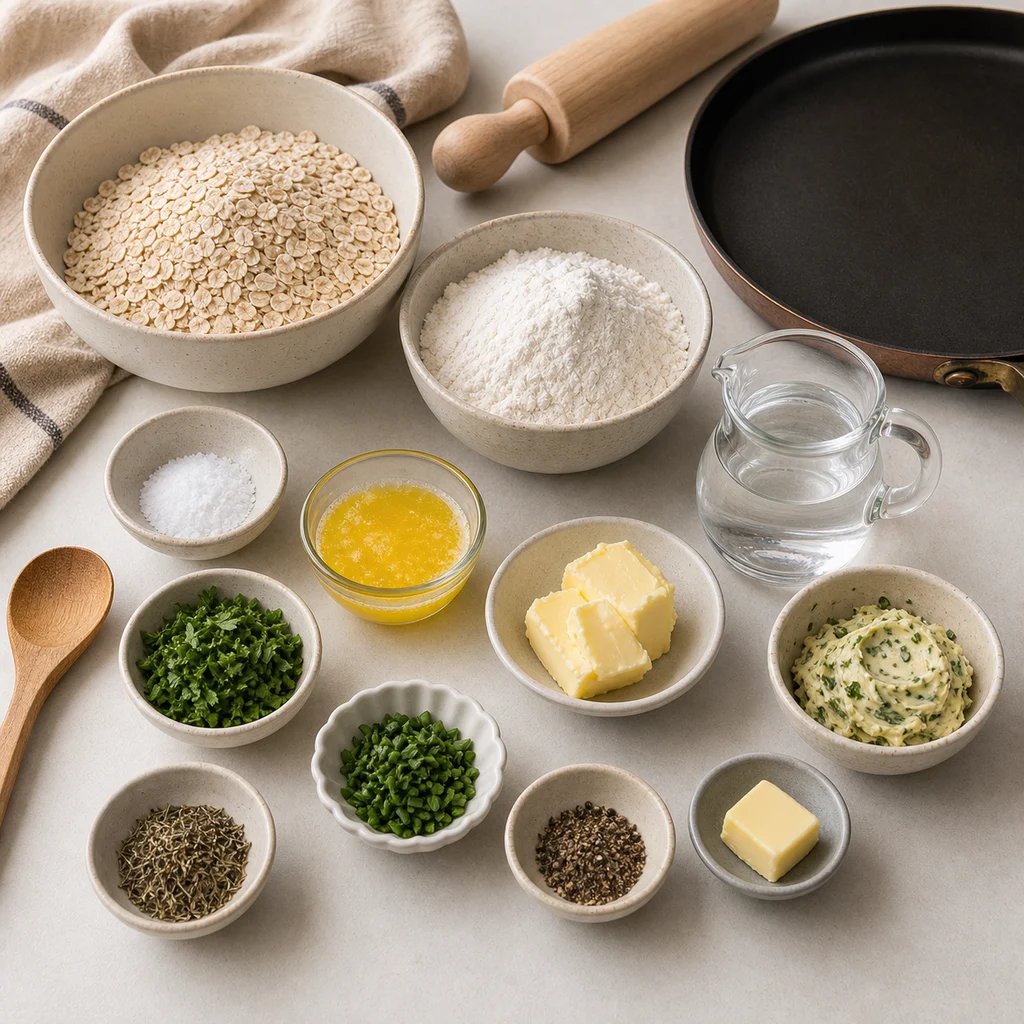
  • 200g rolled oats (quick or old-fashioned)
  • 75g all-purpose flour
  • 1/2 teaspoon salt
  • 250ml boiling water
  • 25g unsalted butter, melted (plus extra for cooking)
  • 50g unsalted butter, softened
  • 1 tablespoon fresh parsley, finely chopped
  • 1 tablespoon fresh chives, finely chopped
  • 1/2 teaspoon dried thyme
  • Salt and freshly ground black pepper, to taste

Instructions

  1. Prepare the savory herb butter by combining softened butter with fresh parsley, chives, dried thyme, salt, and pepper in a small bowl. Mix well and refrigerate until firm.
  2. Pulse rolled oats in a food processor or blender briefly to create a coarse oat flour. Avoid over-processing to retain some texture.
  3. In a large mixing bowl, stir together oat flour, all-purpose flour, and salt.
  4. Carefully pour boiling water over dry ingredients, stirring continuously with a wooden spoon until a soft dough forms.
  5. Add melted butter and mix thoroughly until smooth. Cool dough enough to handle comfortably.
  6. Lightly flour a clean surface and knead dough gently to smooth. Divide into 12 equal portions and shape each into a ball.
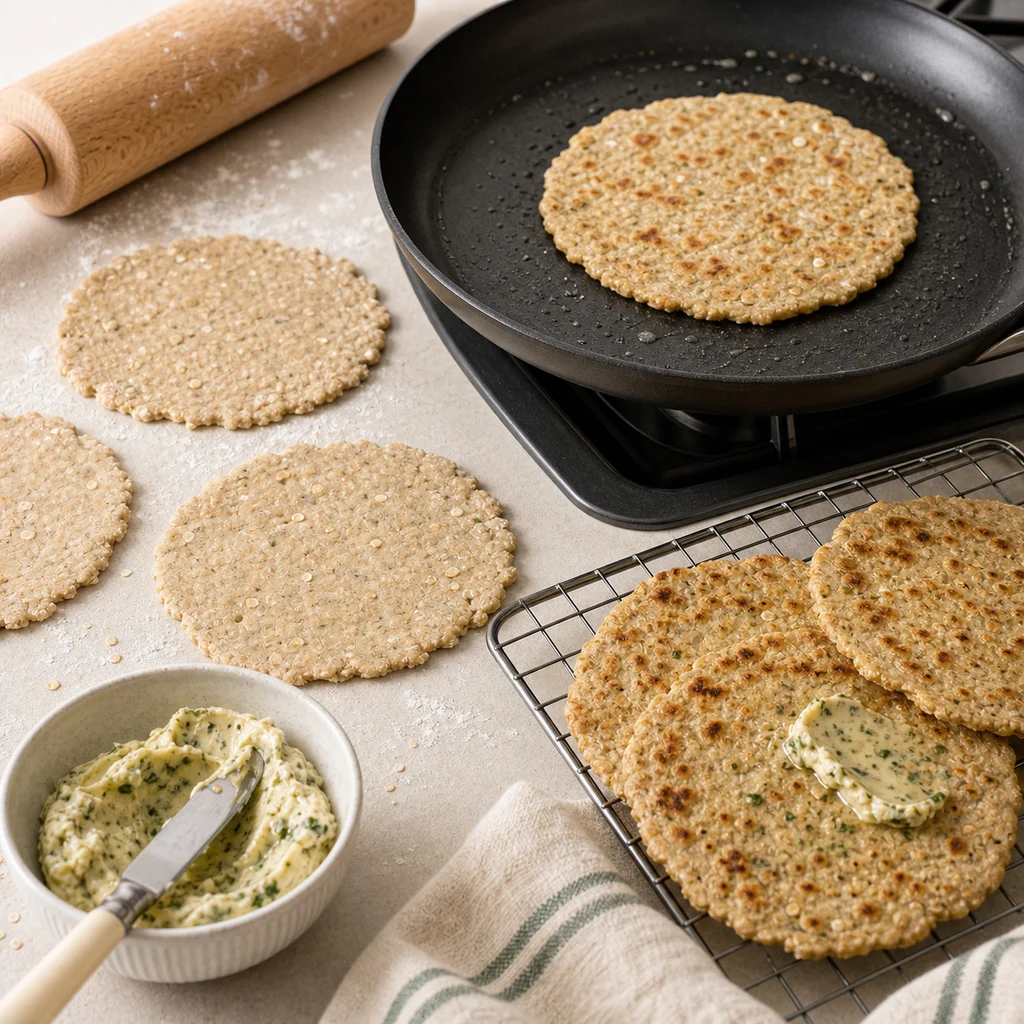
  7. Roll each ball into a flat circle about 12cm (5 inches) wide and approximately 3mm thick.
  8. Heat a non-stick frying pan or griddle on medium and brush lightly with butter.
  9. Cook each oatcake for 2–3 minutes until set and golden brown spots form, then flip and cook the other side for about 2 minutes. The oatcakes should be firm yet slightly springy when done.
  10. Repeat cooking with remaining dough balls, adding butter to the pan as needed.
  11. Serve oatcakes warm with a generous spread of the savory herb butter.

Frequently Asked Questions

Reader questions and answers for this recipe will appear here.

Customize this classic oatcakes recipe with these straightforward ingredient substitutions while maintaining simplicity and authentic taste:

  • Rolled Oats: Swap with certified gluten-free oats for gluten sensitivities.
  • Flour: Use whole wheat flour for a nuttier taste or gluten-free blends to meet dietary needs; adjust liquid if necessary.
  • Butter: Replace unsalted butter with dairy-free margarine or coconut oil for vegan or dairy-free versions. Note coconut oil adds a subtle flavor.
  • Savory Herb Butter: Create a dairy-free herb spread with plant-based butters blended with fresh herbs and seasonings.
  • Herbs: Substitute fresh parsley and chives with dried versions or fresh basil, tarragon, or oregano according to availability and preference.

These substitution options keep the recipe adaptable yet straightforward, suitable for diverse dietary requirements.

Equipment Needed

Essential Equipment for Making Classic British Oatcakes with Savory Herb Butter:

  • Large Mixing Bowl: For combining oat flour and other ingredients.
  • Food Processor or Blender: To pulse rolled oats into coarse oat flour. Alternatively, crush oats with a rolling pin in a sealed bag if no processor is available.
  • Wooden Spoon or Silicone Spatula: For stirring boiling water into the dry mixture to make dough.
  • Measuring Cups and Spoons: For accurate measurement of ingredients to ensure consistent results.
  • Rolling Pin: To roll dough balls into flat oatcakes about 12cm (5 inches) in diameter.
  • Floured Work Surface: Necessary for kneading and rolling without sticking.
  • Non-Stick Frying Pan or Griddle: For evenly cooking oatcakes to a golden crisp finish.
  • Basting Brush (optional): To brush butter on the cooking surface between batches for added flavor and to prevent sticking.
  • Small Mixing Bowl: To prepare and chill the savory herb butter.

These beginner-friendly tools help make the oatcake baking process straightforward and enjoyable.

Ingredient Prep Notes

Rolled Oats: Use quick or old-fashioned rolled oats. Pulse them briefly to maintain oat texture, which is key for traditional crumb and bite. For gluten-free options, select certified gluten-free oats.

Flour: All-purpose flour gives structure and lightness. Gluten-free baking flour blends can substitute but expect slight texture variation. Whole wheat flour adds nuttiness but may require liquid adjustment.

Boiling Water: Hot water softens oats and binds dough without yeast. Stir carefully since mixture is hot.

Butter: Unsalted is best for controlling salt levels. Melted butter enriches the oatcake dough; additional butter is used for cooking. Dairy-free alternatives like coconut oil can be used but affect flavor profile.

Herbs: Fresh parsley and chives provide bright herbal notes; dried thyme adds earthiness. Dried substitutions can be used but adjust quantities for flavor strength.

Salt: Balances flavors. Adjust to dietary preference.

This recipe's minimal, easy-to-find ingredients make it perfect for beginner bakers wanting a classic British quick bread.

Oven Note

While these oatcakes are traditionally cooked on the stovetop, understanding proper oven techniques is useful for baking other quick breads:

  • Preheat Oven Fully: Ensures even baking and proper texture.
  • Use Middle Rack: Provides balanced heat exposure.
  • Limit Door Opening: Prevents heat loss impacting rise and crumb.
  • Verify Oven Temperature: Use an oven thermometer to counter inaccurate thermostat readings.
  • Choose Suitable Bakeware: Light-colored non-stick pans work best for cookies, muffins, and quick breads.
  • Rotate Pans: Mid-bake rotation promotes even cooking.
  • Cool on Wire Rack: Prevents sogginess by allowing steam to escape.

These tips boost confidence when baking and complement stovetop methods like those used in this oatcakes recipe.

Simple Ways to Elevate Your Classic British Oatcakes

Add new flavors and textures to your oatcakes with these beginner-friendly enhancements that keep the recipe easy and delicious:

  • Cheese Addition: Stir 50g grated sharp cheddar or Parmesan into the dough for savory richness.
  • Seeds and Grains: Incorporate tablespoons of flaxseeds, chia seeds, or sunflower seeds for extra crunch and nutrition.
  • Herb Butter Variations: Experiment by adding fresh rosemary, oregano, or thyme to the herb butter for unique flavors.
  • Garlic Butter: Blend roasted garlic into the herb butter for a fragrant, savory spread.
  • Sweet and Savory: Serve oatcakes with honey or fruit preserves alongside herb butter for a delightful taste contrast.
  • Gluten-Free Version: Use gluten-free oat flour and baking flour blends for a safe gluten-free bake.
  • Creative Shapes: Use cookie cutters to form oatcakes into stars, hearts, or seasonal shapes for parties or kids.
  • Warm Toppings: Add sautéed mushrooms or caramelized onions atop warm oatcakes for a tasty snack or light meal.

These easy upgrades enhance flavor without complicating the simple, beginner-friendly recipe.

Related Articles

Read related air fryer guides and cooking tips.

More Recipes

Explore more recipes you may like.

Reviews

Rate this recipe and share a photo of your result.

No reviews yet.

Newsletter

Stay In The Loop

Get fresh recipes, articles, and updates from Beginnerbakes.