Beginnerbakes

Pies & Tarts

Classic British Custard Tart Recipe with Flaky Puff Pastry Crust

By Beginnerbakes Test KitchenReviewed by Beginnerbakes Editorial TeamPublished Apr 14, 2026 · Updated May 12, 2026
British 55 mins beginner-friendlyeasystep-by-stepclassiccomfort-foodpartysnackminimal-ingredientsno-fussholiday

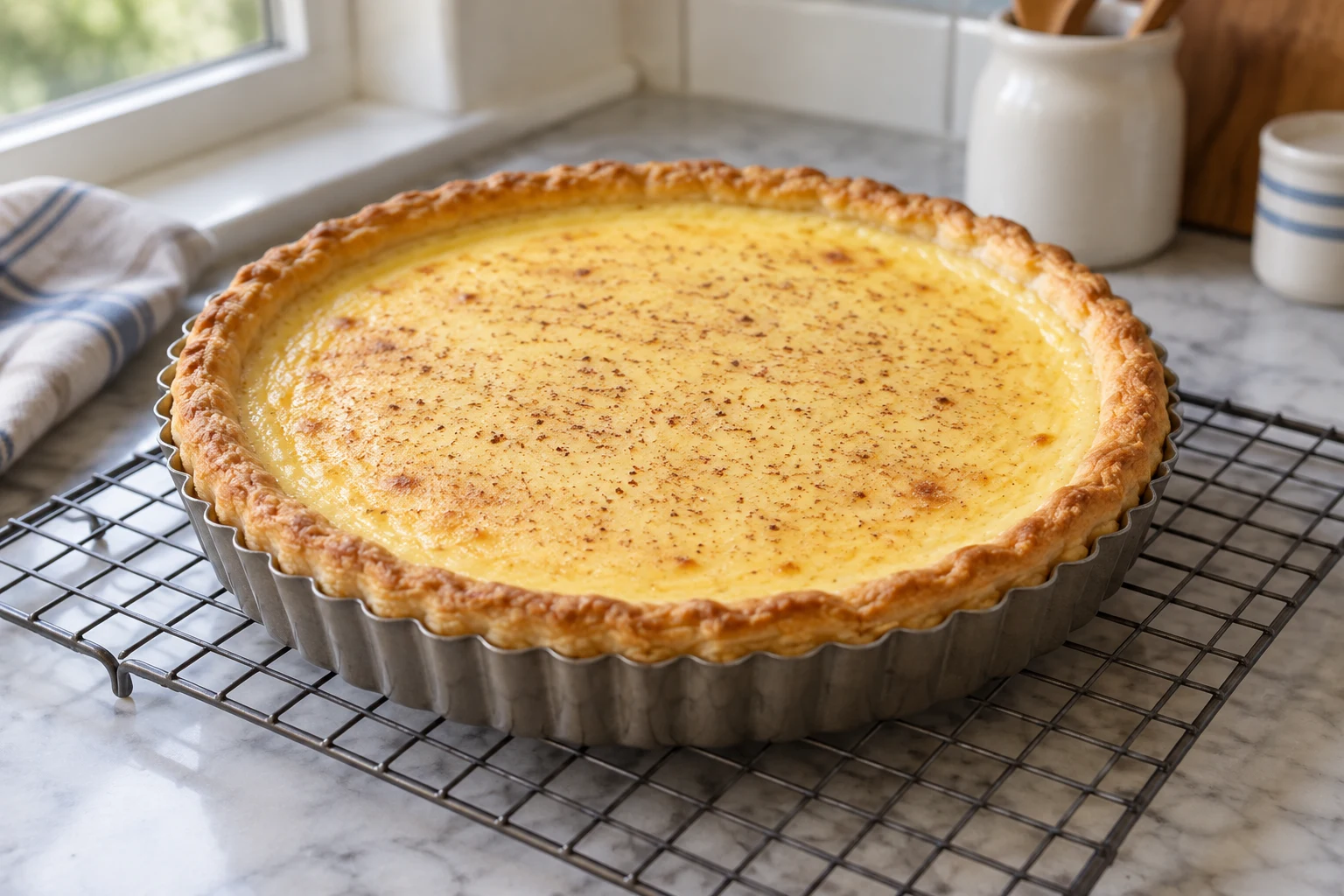
Learn how to make a traditional British custard tart with a flaky puff pastry crust and rich, creamy filling. This easy, beginner-friendly recipe uses minimal ingredients and simple steps to bake a comforting, elegant dessert ideal for holidays, parties, or cozy occasions.

Classic British Custard Tart Recipe with Flaky Puff Pastry Crust
Prep 20 min
Cook 35 min
Total 55 min
Servings 8
Difficulty easy
Cuisine British

Recipe Details

Prep20 min
Cook35 min
Total55 min
Servings8
Difficultyeasy
CuisineBritish
Add To Favorites

Ingredients

Servings 8
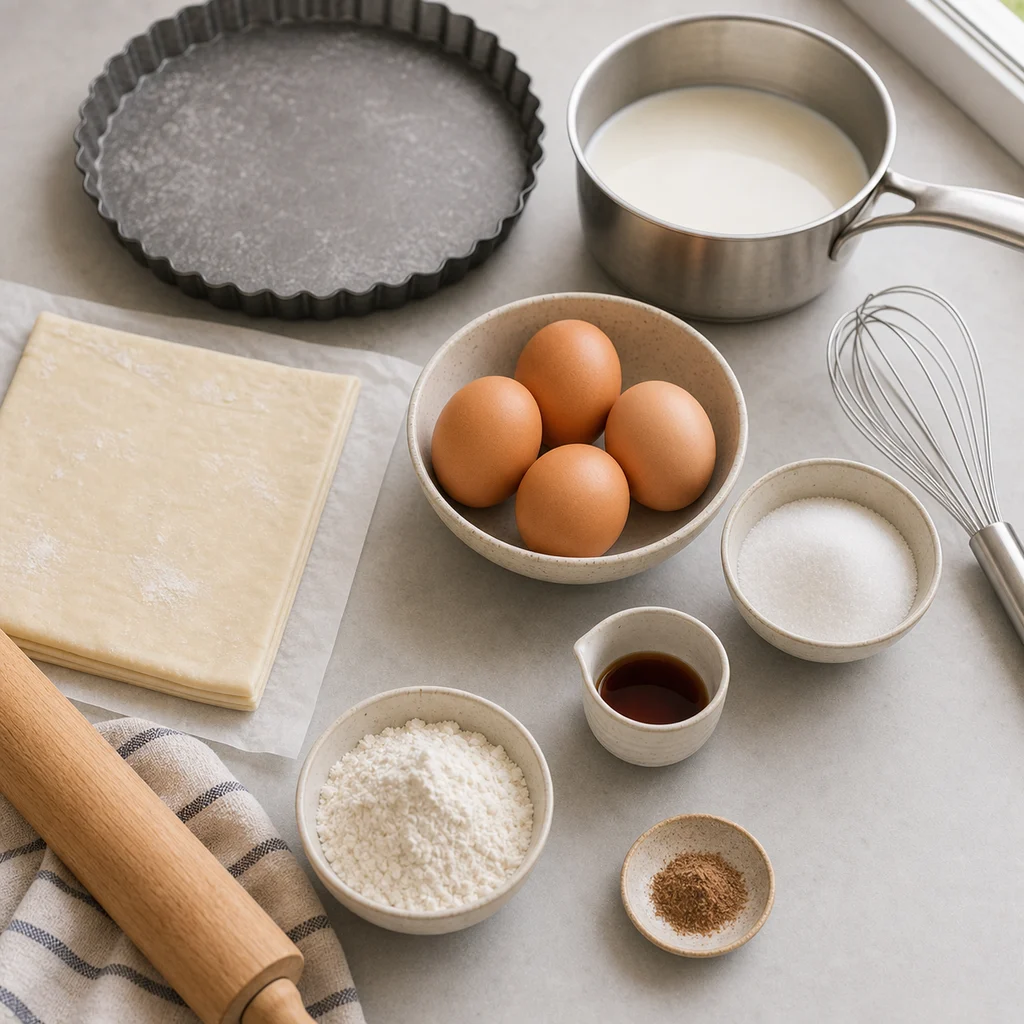
  • 1 sheet frozen puff pastry (about 9 x 9 inches), thawed
  • 2 large eggs
  • 350 ml (about 1½ cups) whole milk
  • 90 g (about 1/3 cup plus 1 tablespoon) granulated sugar
  • 1 teaspoon vanilla extract
  • 30 g (about 2 tablespoons) plain flour
  • Ground nutmeg, for dusting

Instructions

  1. Preheat your oven to 200°C (400°F). Lightly grease a 9-inch tart tin or pie dish.
  2. Roll out the thawed puff pastry on a lightly floured surface to fit your tart tin, about 2mm thick.
  3. Carefully line the tart tin with the puff pastry, pressing gently into the edges. Trim any excess pastry from the edges.
  4. Use a fork to prick holes evenly across the base of the pastry to prevent it puffing up too much during baking.
  5. Place a sheet of parchment paper over the pastry and fill with baking beans or dried beans to blind bake the crust.
  6. Bake the pastry base in the preheated oven for 12 minutes. Then remove the parchment and beans and bake for 5 more minutes until lightly golden.
  7. Meanwhile, prepare the custard filling: In a mixing bowl, whisk together the eggs, sugar, and vanilla extract until smooth and pale.
  8. Sift in the plain flour and whisk again to combine without lumps.
  9. Heat the milk gently in a saucepan until just warm (do not boil). Gradually pour the warm milk into the egg mixture, whisking constantly to prevent curdling.
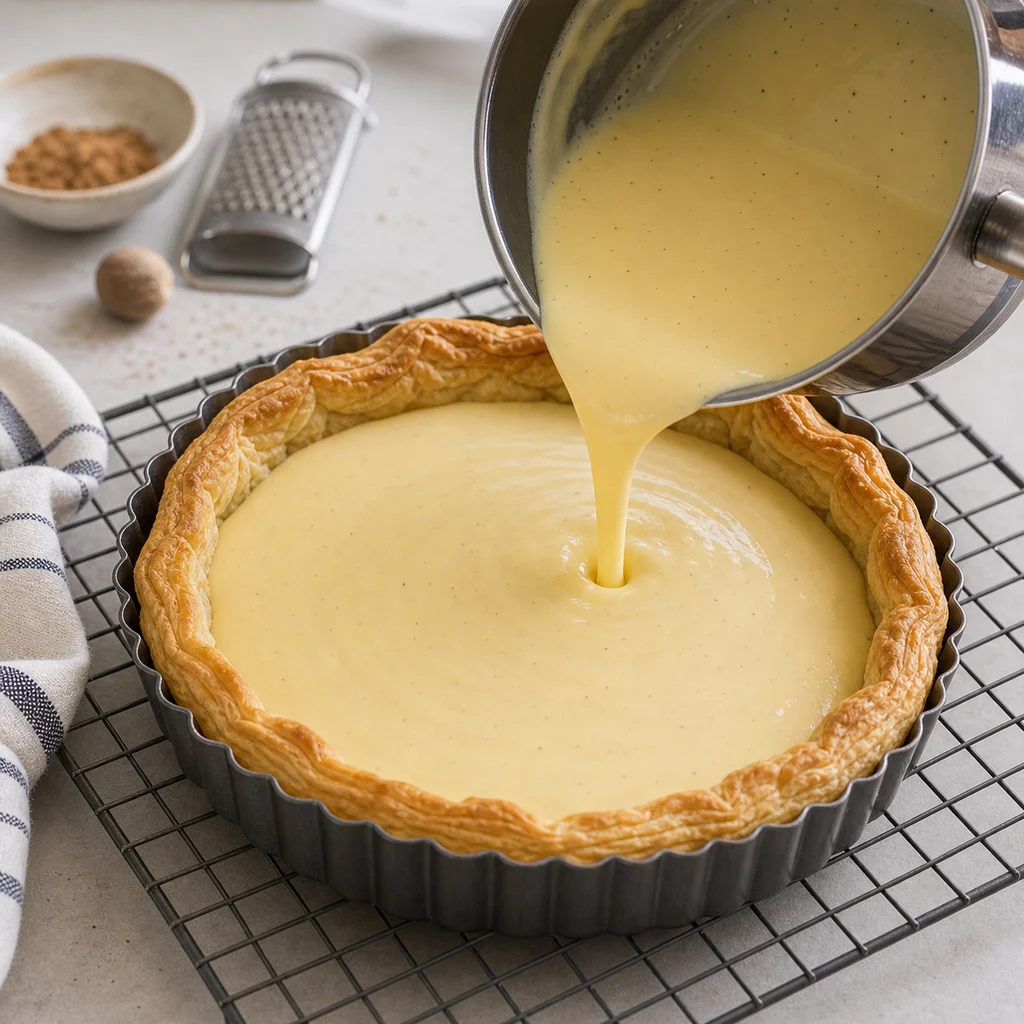
  10. Return the mixture to the saucepan and cook gently over low heat, stirring continuously until the custard thickens enough to coat the back of a spoon, about 5-7 minutes. Do not boil.
  11. Pour the thickened custard into the pre-baked tart shell, filling just below the rim.
  12. Sprinkle the top lightly with ground nutmeg for traditional flavor and aroma.
  13. Reduce the oven temperature to 180°C (350°F) and bake the filled tart for 20 minutes, or until the custard is set but still slightly wobbly in the center.
  14. Allow the tart to cool in the tin for 15 minutes, then remove and cool completely on a wire rack before slicing.
  15. Serve the custard tart slightly warm or at room temperature. Enjoy!

Frequently Asked Questions

Reader questions and answers for this recipe will appear here.

For dietary preferences or ingredient flexibility, try these wholesome substitutions for the traditional British custard tart recipe:

  • Puff Pastry Alternatives: Choose gluten-free shortcrust pastry or a homemade almond flour crust as lighter or gluten-free bases without sacrificing flavor.
  • Milk Options: Plant-based milks like oat, almond, or coconut milk work well as dairy-free replacements. Note coconut milk adds subtle coconut undertones.
  • Egg Replacements: Vegan egg replacers, such as a flax egg (1 tbsp flaxseed meal + 3 tbsp water per egg), provide a good binding substitute.
  • Sugar Substitutes: Use coconut sugar or natural low-glycemic sweeteners like erythritol to lower sugar content while maintaining sweetness.
  • Flour Swaps: Gluten-free baking flour blends or combinations of rice and tapioca flour keep the custard thick while accommodating gluten intolerance.
  • Vanilla Alternatives: Vanilla bean paste enhances flavor depth; almond extract adds a subtle nutty note suitable for variations.
  • Spice Substitutes: Swap nutmeg for cinnamon or a pinch of cardamom to create a warm, aromatic twist to the classic custard.

These ingredient replacements keep the recipe approachable and delicious, making it suitable for varied diets while preserving the comforting taste and texture that make this custard tart a beloved British dessert.

Equipment Needed

To bake this traditional British custard tart with a flaky puff pastry crust, you'll need a few essential kitchen tools to achieve perfect results. Equip your kitchen with:

  • 9-inch tart tin or pie dish: Ideal for shaping and baking the puff pastry crust and custard filling evenly.
  • Rolling pin: For rolling out thawed puff pastry to the perfect thickness matching your tart tin.
  • Floured surface: Ensures puff pastry does not stick while rolling and shaping.
  • Fork: Used to prick the pastry base to prevent excessive puffing during baking.
  • Baking beans or dried beans: Weight for blind baking to keep the crust flat and crisp.
  • Parchment paper: Liner during blind baking to hold the beans in place and prevent sticking.
  • Mixing bowl and whisk: For combining eggs, sugar, vanilla, and flour smoothly for the custard.
  • Sieve or fine mesh strainer: To sift flour ensuring a lump-free custard mixture.
  • Saucepan: To gently heat milk and cook the custard filling over low heat with continuous stirring.
  • Measuring cups and spoons: Essential for accurately measuring ingredients for consistent baking results.
  • Wire cooling rack: Allows the tart to cool evenly without soggy crust bottom.

Having these basic tools ready will help you bake a flawless custard tart, perfect for beginners aiming for a delightful traditional British dessert. Happy baking!

Ingredient Prep Notes

Puff Pastry: For best results, thaw frozen puff pastry in the fridge overnight or on the counter for 30 minutes until pliable but cool. Avoid over handling to retain its flakiness. Alternatively, a shortcrust pastry can be used for a less flaky but still tasty crust.

Eggs: Use large, fresh eggs at room temperature for optimal blending and smooth custard texture. For vegan adaptations, commercial egg replacers or a mix of cornstarch and water can substitute, although texture differs slightly.

Milk: Whole milk is recommended to achieve a rich, creamy custard. Plant-based milks like oat or almond provide a dairy-free alternative with mild flavor differences. Avoid boiling to prevent curdling.

Sugar: Granulated sugar works best for sweetness and texture. To reduce sugar, try coconut sugar or baking-appropriate sugar substitutes, noting they can alter color and texture.

Flour: Plain flour thickens the custard nicely. Gluten-free all-purpose flour or cornstarch (at half quantity) can be substituted for gluten intolerance while maintaining custard consistency.

Vanilla Extract: Pure vanilla extract imparts classic flavor; vanilla bean paste or seeds offer a more intense aroma. For allergies or sensitivities, ensure alcohol-free vanilla extract is used if needed.

Nutmeg: Freshly grated nutmeg adds warm spice and aroma traditionally used. Cinnamon or mixed baking spices like allspice can substitute if unavailable.

Accurate measuring and gradual mixing of warm milk into eggs help prevent curdling, making this simple recipe ideal for beginner bakers seeking a comforting and classic dessert.

Oven Note

Successfully baking a flaky custard tart crust and smooth filling depends on mastering your oven settings. Here are key oven tips for bakers at all skill levels:

  • Preheat Completely: Ensure the oven reaches the target temperature (200°C/400°F) before baking the pastry to promote crispness and puff pastry rise.
  • Position on Middle Rack: Bake your tart on the center rack to maintain even heat distribution and avoid under or overcooked spots.
  • Blind Bake with Care: Use parchment and baking beans to keep pastry base flat and prevent bubbling. Remove beans midway to allow the crust to become lightly golden and crisp.
  • Adjust Temperature for Filling: Lower oven temperature to 180°C (350°F) before baking the custard-filled tart to set the filling gently without cracking or curdling.
  • Avoid Frequent Oven Door Opening: Minimize opening the door during baking to stabilize heat and ensure even cooking and custard setting.
  • Check Doneness Correctly: The custard should be firm but slightly wobbly in the center, as it firms further when cooled.
  • Use an Oven Thermometer if Possible: Home ovens vary, so an oven thermometer helps maintain accurate temperatures for best outcomes.

These oven guidelines help build confidence for beginners and guarantee delicious results for this tart and other similar baking projects.

Easy Customizations to Enhance Your Classic Custard Tart

  • Fresh Fruit Toppings: Add vibrant slices of berries, kiwi, or peaches after baking for a refreshing and colorful presentation ideal for summer and festive occasions.
  • Honey or Caramel Drizzle: Lightly drizzle honey or caramel sauce over the cooled tart to boost richness and create an inviting glossy finish, perfect for holiday parties.
  • Warm Spice Mix-ins: Incorporate cinnamon or ground cardamom into the custard batter before baking to give a cozy, spiced twist especially appreciated in cooler months.
  • Dairy-Free Milk Substitutes: Use almond, oat, or soy milk instead of whole milk to make this custard tart vegan and dairy-free without losing creamy texture.
  • Whole-Grain or Gluten-Free Flours: Boost the nutrition with whole-grain flour or substitute gluten-free options in the custard for allergy-friendly variations that remain beginner-friendly.
  • Toasted Nut Toppings: Sprinkle toasted almonds or pecans on the tart after baking for added crunch; those with nut allergies can omit this step.
  • Citrus Zest: Stir in lemon or orange zest into the custard mixture before baking to impart a bright, fresh flavor that lifts this classic dessert.
  • Whipped Cream or Vegan Cream: Serve with a dollop of freshly whipped cream or vegan alternative to add extra richness and make the tart even more indulgent.

These simple upgrade ideas make it easy to personalize your custard tart, delighting family and guests with unique flavors while keeping preparation effortless.

Related Articles

Read related air fryer guides and cooking tips.

More Recipes

Explore more recipes you may like.

Reviews

Rate this recipe and share a photo of your result.

No reviews yet.

Newsletter

Stay In The Loop

Get fresh recipes, articles, and updates from Beginnerbakes.